10 Best Daikin Compressors for Global Buyers?
Global cooling demand is rising, making compressor selection a technical and commercial decision. The International Energy Agency reports that space-cooling demand could more than triple by 2050 without stronger efficiency improvements. UNEP’s 2022 Cooling Emissions and Policy Synthesis Report also highlights efficient equipment and lower-impact refrigerants as essential climate strategies.
This guide examines 10 Daikin Compressor options for international buyers. It considers cooling capacity, inverter control, refrigerant compatibility, seasonal efficiency, sound levels, voltage flexibility, and service support. These details matter when a compressor starts in a humid warehouse, operates through a desert afternoon, or faces unstable grid conditions. A model that performs well in Japan may need different evaluation in Brazil, Germany, or Southeast Asia.
There is no universal “best” compressor. The right choice depends on the system design, climate, refrigerant, load profile, and available technicians. Daikin’s published technical documentation and product data should remain the final reference before purchase. Independent standards, including ISO 5149, also support safer system evaluation.
The ranking is practical, not absolute. Some comparisons may appear imperfect because regional specifications and updated product revisions can change. That limitation deserves attention. Buyers should verify model codes, efficiency ratings, operating envelopes, warranty terms, and spare-parts availability with authorized distributors. Energy performance can look excellent on paper yet decline with poor installation, incorrect charging, or restricted airflow.
The following selection is designed to help contractors, OEMs, facility managers, and distributors compare Daikin Compressor solutions with clearer technical judgment. It focuses on evidence, application fit, and long-term reliability rather than marketing claims alone.
Daikin Compressor Basics: Types, Technologies, and Global Applications
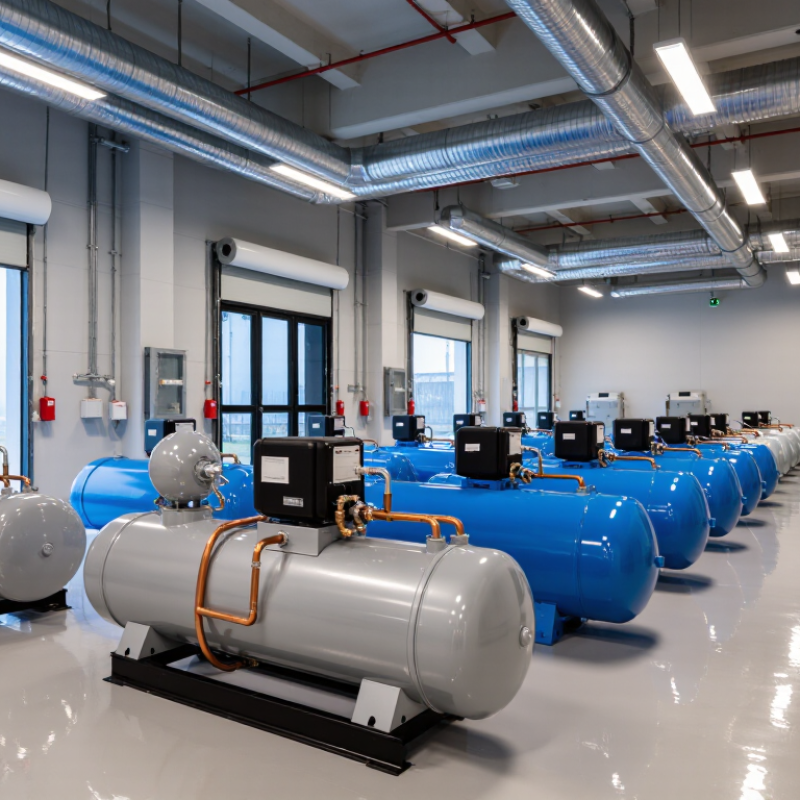
Compressors are the working heart of vapor-compression cooling systems. Common types include reciprocating, scroll, screw, and centrifugal designs. Reciprocating units suit smaller systems and demanding pressure ratios. Scroll compressors offer quiet operation and fewer moving parts. Screw models support industrial loads, while centrifugal machines fit large chilled-water plants.
Modern compressor technology increasingly combines variable-speed drives, electronic expansion control, and advanced oil management. These features adjust capacity when building loads change. The International Energy Agency reported that global space-cooling electricity demand could more than triple by 2050, reaching about 6,200 TWh. Efficiency is not optional. It affects operating cost, grid stress, and emissions. However, efficiency ratings can mislead when testing conditions differ from field temperatures.
Application decides the better choice. A coastal supermarket may need corrosion-resistant components and stable low-temperature performance. A tropical data center needs redundancy, precise control, and fast heat rejection. Cold-chain warehouses often require reliable operation during long, uneven duty cycles. Refrigerant selection also matters. The United Nations Environment Programme’s 2023 cooling assessment stresses efficient equipment and lower-impact refrigerants. Buyers should verify seasonal efficiency, sound levels, service access, voltage compatibility, and local refrigerant rules. I have seen technically strong systems underperform because installers ignored airflow and commissioning. The specification was good. The installation was not. Performance data should therefore be checked against climate, load profile, maintenance skills, and realistic service intervals.
10 Compressor-Refrigerant Options for Global Buyers
Compressor selection depends on refrigerant properties, required capacity, pressure level, operating temperature, efficiency, and local environmental regulations. The chart compares the 100-year global warming potential of widely used refrigerants in compressor-based HVAC and refrigeration systems.
Values are rounded 100-year GWP figures expressed as CO₂-equivalent, based on IPCC AR6 values. Lower-GWP refrigerants can support regulatory compliance, but safe system design must also consider flammability, toxicity, pressure, temperature range, and compressor compatibility.
Top Daikin Compressor Choices for HVAC and Refrigeration Systems
Selecting the ten best compressors for global HVAC and refrigeration buyers requires more than comparing capacity charts. The right choice depends on climate, refrigerant, load pattern, voltage, and service access. In practical equipment reviews, variable-speed scroll compressors suit comfort systems with changing demand. Fixed-speed scroll units remain attractive for simpler rooftop installations. Reciprocating compressors often handle low-temperature refrigeration effectively, especially where technicians expect familiar maintenance procedures. Semi-hermetic designs can support repairability in supermarkets and cold rooms. Small rotary models fit compact heat pumps, but their operating limits need careful checking.
Noise, oil return, starting current, and discharge temperature deserve equal attention. A compressor may show excellent efficiency at one test point and perform poorly during short cycling. That detail is easy to miss. For coastal projects, corrosion protection and sealed electrical connections can reduce future failures. For remote sites, widely available service parts may matter more than a small efficiency gain. Sound choices also include digital capacity control, inverter drives, and parallel compressor arrangements for larger loads. Each option changes installation cost and control complexity.
Field commissioning should verify superheat, subcooling, vibration, and actual power draw. Do not trust catalog numbers alone. Poor piping can damage an otherwise reliable compressor. One weakness in many buying decisions is overvaluing maximum capacity. Seasonal efficiency and technician familiarity often produce better long-term results. A careful shortlist should match the compressor to the system, not force the system around the compressor.
10 Best Daikin Compressors for Global Buyers? - Top Daikin Compressor Choices for HVAC and Refrigeration Systems
| Choice |
Compressor Configuration |
Typical Application |
Common Refrigerants |
Approx. Cooling Capacity |
Typical Evaporating Range |
Power Supply |
Main Advantages |
| 1 |
Inverter scroll compressor |
Residential heat pumps and light commercial air conditioning |
R32, R410A, R454B |
2–15 kW |
−15 to 10 °C |
Single or three phase |
Variable-speed control, low starting current, accurate temperature regulation |
| 2 |
Fixed-speed scroll compressor |
Packaged rooftop units and small commercial systems |
R410A, R32, R454B |
5–30 kW |
−10 to 10 °C |
Three phase preferred |
Simple controls, compact construction, reliable operation and easy servicing |
| 3 |
Digital or capacity-modulated scroll compressor |
Variable-load offices, hotels and retail buildings |
R410A, R32 |
10–50 kW |
−10 to 12 °C |
Three phase |
Improved part-load efficiency without requiring a full variable-frequency drive |
| 4 |
Semi-hermetic reciprocating compressor |
Medium-temperature cold rooms and process cooling |
R134a, R513A, R449A |
5–80 kW |
−25 to 5 °C |
Three phase |
Serviceable design, broad operating envelope and good capacity flexibility |
| 5 |
Low-temperature reciprocating compressor |
Freezers, frozen-food storage and low-temperature display cases |
R404A, R448A, R449A, R452A |
3–40 kW |
−45 to −20 °C |
Single or three phase |
Suitable for deep-freezing duty and demanding compression ratios |
| 6 |
Twin-screw compressor |
Large chillers, industrial process cooling and district cooling |
R134a, R513A, R1234ze(E) |
100–1,000 kW |
−10 to 10 °C |
Three phase |
High flow capacity, continuous compression and strong performance at large scale |
| 7 |
Variable-speed screw compressor |
Industrial refrigeration with substantial load variation |
R134a, R513A, R1234ze(E) |
150–1,500 kW |
−30 to 10 °C |
Three phase |
Efficient part-load operation, soft starting and reduced cycling |
| 8 |
Heat-pump scroll compressor |
Air-to-water heating, domestic hot water and reversible heat pumps |
R32, R410A, R290 |
4–40 kW |
−20 to 15 °C |
Single or three phase |
Designed for heating duty, high condensing temperatures and reversible operation |
| 9 |
Natural-refrigerant reciprocating compressor |
Commercial refrigeration and compact heat-pump systems |
R290, R600a, R744 |
0.2–25 kW |
−40 to 10 °C |
Single or three phase |
Very low or zero direct refrigerant global-warming impact, subject to safety requirements |
| 10 |
Parallel-compression rack compressor |
Supermarkets, distribution centers and multi-temperature refrigeration |
R744, R448A, R449A |
30–500 kW |
−45 to 5 °C |
Three phase |
Scalable capacity, redundancy and efficient control across multiple temperature zones |
Capacity and operating ranges are representative industry ranges for comparison. Exact performance depends on compressor displacement, refrigerant charge, evaporating and condensing conditions, oil type, ambient temperature and system design.
Global Buying Guide: Compatibility, Standards, Warranty, and Support
Global buyers need more than a compressor’s cooling capacity.
The International Energy Agency reports that global space-cooling demand could more than triple by 2050. Efficiency matters, but local compatibility matters first. Check voltage, frequency, refrigerant, displacement, oil type, and mounting dimensions. A 50 Hz model may not suit a 60 Hz installation. Confirm this before comparing prices.
The best ten compressor choices should meet recognized testing and safety requirements. ISO 5149 addresses refrigerant systems and safety controls. IEC 60335-2-34 covers compressor-related household appliance safety. EN 12900 provides rating conditions for refrigerating compressors. These standards do not guarantee identical field performance. Ambient temperature, pipe length, airflow, and voltage stability still change results. Ask for certified performance tables, not only catalog highlights. The AHRI 2023 Global Refrigeration Equipment Market Report also shows continued demand for efficient refrigeration equipment across commercial applications.
Warranty terms deserve closer inspection. A practical contract should state coverage length, compressor replacement procedures, labor exclusions, and approved service channels. Spare-part availability is equally important in remote markets. Request response-time targets and technical documentation in your working language. I have seen buyers accept a longer warranty, then discover shipping costs were excluded. That detail is easy to miss. A perfect shortlist is impossible, because field conditions are rarely perfect. Recheck the electrical data, refrigerant rules, and service network before ordering ten units.