How to Choose the Right Ac Rotary Compressor for Your Cooling Needs?
Choosing the right AC rotary compressor for your cooling needs can feel overwhelming. With so many options available, making the right decision is crucial. An AC rotary compressor plays a vital role in the efficiency of your air conditioning system. It directly impacts both performance and energy consumption.
When selecting an AC rotary compressor, understanding your specific requirements is essential. Different environments demand different cooling capacities. You may need to consider the size of your space, the cooling load, and even energy efficiency ratings. Each choice carries its own implications.
Consulting with HVAC professionals can provide valuable insights. They can guide you in understanding technical specifications and compatibility. However, personal research is equally important. Mistakes can be costly, so take time to reflect on your options. Evaluating brands and warranty information is necessary. The goal is to find a reliable AC rotary compressor that meets your unique needs for comfort and efficiency.

Understanding the Basics of AC Rotary Compressors
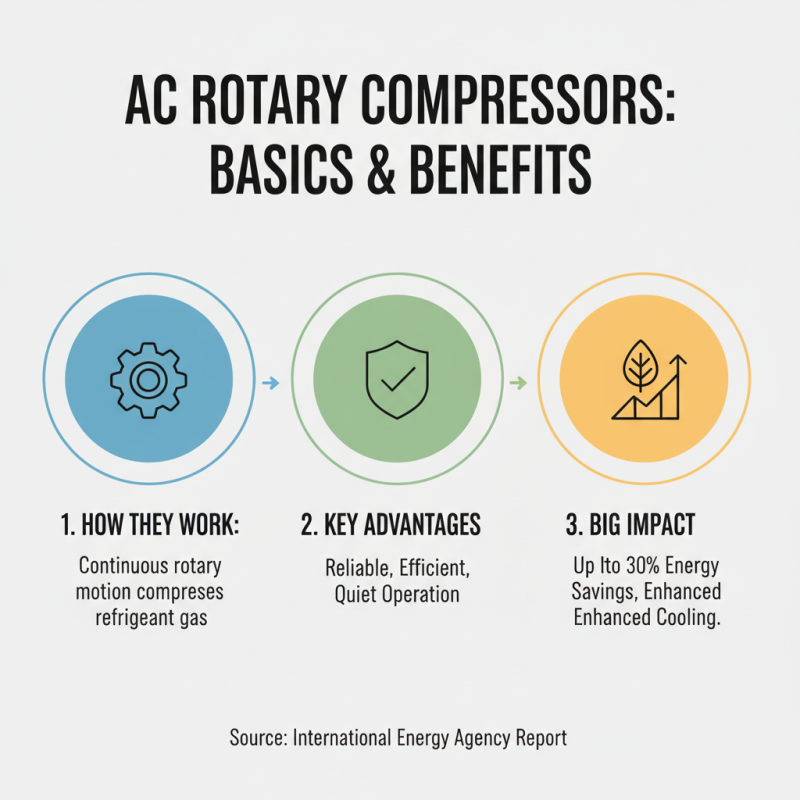
Understanding the basics of AC rotary compressors is crucial for making informed decisions regarding your cooling needs. Rotary compressors are favored for their reliability and efficiency. They are often used in residential and commercial air conditioning systems. A report by the International Energy Agency suggests that choosing the right compressor can improve system performance and reduce energy costs by up to 30%.
AC rotary compressors operate using a simple mechanism. They compress refrigerant vapor, which is essential for the cooling process. The efficiency of these compressors is influenced by factors such as the size of the unit and the specific application. A study by the American Society of Heating, Refrigerating and Air-Conditioning Engineers highlights the importance of proper sizing. An oversized unit can lead to short cycling, while an undersized unit may struggle to cool adequately.
Selecting the right compressor involves understanding your specific requirements. Factors like ambient temperature, desired indoor climate, and even the layout of your space can affect performance. Be aware that what works for one setting may not suit another. It’s vital to seek expert advice if uncertain. Engaging with HVAC professionals can provide clarity. Proper installation and maintenance are equally important to ensure longevity and efficiency in cooling performance.
Factors to Consider When Choosing an AC Rotary Compressor
Choosing the right AC rotary compressor can significantly impact your cooling efficiency. Start by considering the cooling capacity needed for your space. Measure the area that requires cooling. Understand the BTU (British Thermal Unit) requirements for your specific room size. This will help you select a compressor that matches your needs accurately.
Another key factor is energy efficiency. Look for compressors with high SEER (Seasonal Energy Efficiency Ratio) ratings. Higher SEER ratings indicate better energy use, which translates to lower electricity bills. Pay attention to the compressor's noise levels as well. Some models can be quite loud, which might not be ideal for residential settings.
Tips: Always check the warranty and service options before making a purchase. A reliable warranty can save you from future costs. Don’t rush this decision. Take time to compare different models and specifications. It’s essential to find a compressor that provides long-term performance and reliability.
How to Choose the Right Ac Rotary Compressor for Your Cooling Needs?
| Factor |
Description |
Importance Level |
| Cooling Capacity |
The amount of cooling the compressor can provide, often measured in BTUs or tons. |
High |
| Energy Efficiency |
Rated by SEER or EER values, indicating how efficiently the compressor uses energy. |
High |
| Noise Level |
Measured in decibels (dB), important for residential applications to avoid disturbance. |
Medium |
| Size and Dimensions |
Physical size of the compressor which must fit the designated installation space. |
High |
| Refrigerant Type |
The type of refrigerant used, impacting both efficiency and environmental factors. |
Medium |
| Installation Requirements |
Specific needs for installation, including mounting and electrical requirements. |
Medium |
| Maintenance Needs |
Frequency and kind of maintenance required to keep the compressor functioning optimally. |
Medium |
Assessing Your Cooling Needs: Size and Capacity Requirements
When evaluating your cooling needs, size and capacity are crucial. The right AC rotary compressor should match the square footage of your space. According to the U.S. Department of Energy, a typical air conditioning unit needs about 20 BTUs for each square foot of living space. Therefore, a 1,500 square foot home would require approximately 30,000 BTUs. This calculation is essential to ensure your unit operates efficiently.
Another critical consideration is the compressor's efficiency rating. Look for units with a Seasonal Energy Efficiency Ratio (SEER) of at least 14. Units with higher SEER ratings provide greater cooling efficiency. This not only affects comfort but also impacts your energy bills. The Energy Star program reports that high-efficiency units can save up to 30% on cooling costs.
Beyond calculations, consider your local climate. Areas with high humidity may require a more robust capacity. Additionally, poorly insulated spaces can result in a mismatch. This can lead to overworking your compressor. Over time, this can reduce its lifespan. Reflect on the layout and insulation of your space to avoid these pitfalls. Balancing size, efficiency, and local conditions is key to finding the right compressor.
Energy Efficiency Ratings and Their Importance in Selection
When selecting an AC rotary compressor, energy efficiency ratings are crucial. These ratings indicate how much energy the unit consumes compared to the cooling output it provides. Higher ratings usually mean lower utility bills. An energy-efficient compressor can significantly reduce your long-term operational costs, making it a smart investment.
Understanding the different efficiency metrics is essential. Look for Seasonal Energy Efficiency Ratio (SEER) and Energy Efficiency Ratio (EER) ratings. SEER measures efficiency over a cooling season, while EER gives a snapshot of performance at peak conditions. These ratings help you compare models based on their energy performance. However, not all units labeled efficient are indeed the best choice for your specific needs.
Consider the size of your space and local climate. A unit too powerful for a small room can waste energy, while an undersized unit may struggle to cool effectively. Balancing the compressor's capacity and efficiency is vital. The temptation to choose the most efficient model can be misleading. It’s often thought that higher efficiency always equals better performance, but that's not always true in practice.
Maintenance and Longevity: Ensuring Reliability of Your Compressor
When considering the longevity of your AC rotary compressor, effective maintenance is crucial. According to industry reports, regular maintenance can extend compressor life by up to 30%. This includes checking refrigerant levels, cleaning coils, and inspecting electrical connections. Neglecting these tasks can lead to inefficiencies and costly repairs.
**Tip:** Schedule routine inspections every six months. This proactive approach can catch minor issues before they escalate.
Another significant factor affecting compressor reliability is the environment. High humidity and fluctuating temperatures can strain your system. Data shows that compressors operating in such conditions face a 25% higher failure rate. It's essential to assess your environment and install necessary protective measures.
**Tip:** Invest in quality filters and consider UV lights to reduce mold and moisture buildup.
Ignoring small signs of wear can lead to bigger problems. Monitoring noise levels and vibrations is essential, as these can indicate underlying issues. Address these problems early to avoid extensive downtime.
Cooling Needs and Compressor Performance Comparison