How to Choose the Best Motor for Your Industrial Needs?
Choosing the right motor is vital for industrial applications. An inadequate motor can lead to inefficiencies. It may cost your business time and money.
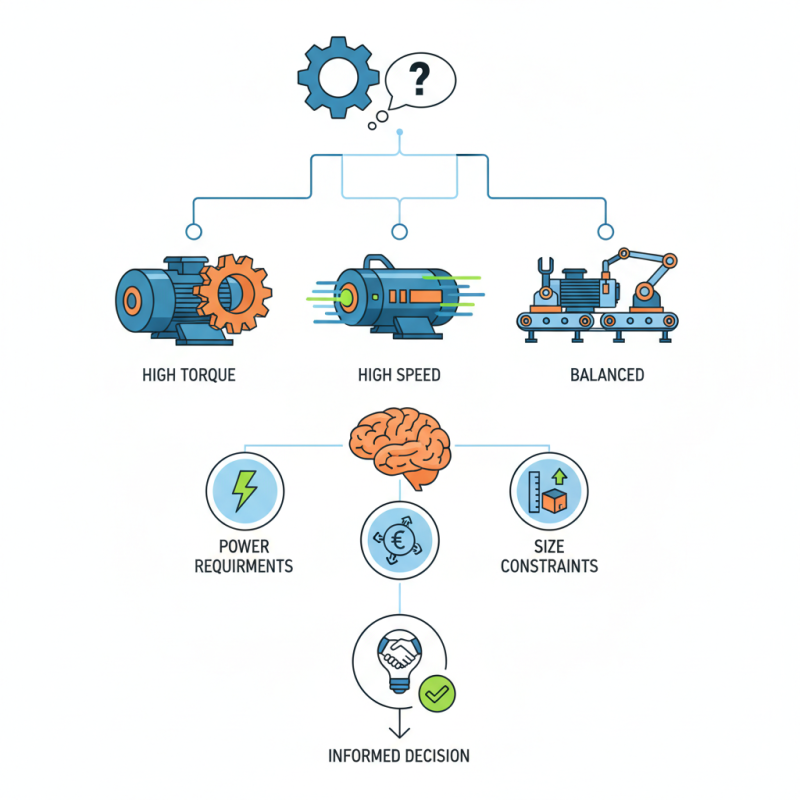
Consider the specific needs of your operation. Different motors serve different purposes. Some are built for high torque. Others excel in speed. Understanding these factors can enhance productivity.
Expert insights suggest analyzing power requirements. Evaluate power sources, efficiency, and size constraints. Reliable data drives informed decisions. Sometimes, the perfect motor is not the most expensive one. Reflect on your unique circumstances before committing. The right motor choice can be a game changer for your industrial needs.
Understanding Different Types of Industrial Motors and Their Applications
When selecting an industrial motor, understanding the different types can greatly influence your choice.
Induction motors are commonly used in various applications due to their durability and efficiency.
These motors operate using electromagnetic induction and are great for continuous operation. However, they may not be suitable for applications requiring high starting torque.
DC motors offer advantages in speed control and torque. They are commonly used in automation processes where precision is crucial.
However, their maintenance can be higher due to the brushes required. Another option is stepper motors.
They excel in applications that demand high precision and control. Yet, they have limitations, such as torque drop at higher speeds.
Considering these factors is essential. Each motor type serves specific needs, but challenges exist.
Assess the requirements of your projects carefully.
Balancing efficiency, control, and maintenance may reveal surprising insights. This process can lead to better decision-making for your industrial applications.
Evaluating Power Requirements for Your Specific Industrial Tasks
Selecting the optimal motor for industrial applications begins with understanding power requirements. Evaluating these needs entails analyzing the workload and the specific tasks at hand. Each operation demands unique specifications that define efficiency, speed, and torque. A thorough assessment of these parameters helps in choosing a suitable motor.
When evaluating power needs, consider the total horsepower required. This includes the load the motor will carry and the duration of usage. It's also crucial to factor in operational peaks and troughs. Underestimating power can lead to performance issues, while overestimating can incur higher costs.
Another factor is the motor's environment. Different settings present unique challenges. Factors like temperature, humidity, and the presence of dust can affect motor performance. Choosing a motor that can withstand these conditions is vital. Thus, engage with industry professionals or engineers to gain insight. Their expertise enhances the reliability and effectiveness of your selection. Reflecting on past experiences also aids in making a more informed choice.
Power Requirements for Different Industrial Motors
Assessing Efficiency Ratings and Energy Consumption of Motors
Choosing the right motor for industrial applications is crucial.
Efficiency ratings and
energy consumption play significant roles in this decision.
A motor’s efficiency indicates how well it converts electrical energy into mechanical energy.
Higher efficiency reduces energy costs, benefiting both the environment and your bottom line.
Tips: Look for motors with efficiency labels. Check standards like
IE3 or
IE4.
These motors often pay off in savings over time, despite potentially higher upfront costs.
Energy consumption is another key factor. An inefficient motor can lead to skyrocketing electricity bills.
Regularly assess your motors' performance. Are they still meeting your needs?
If not, consider upgrades or replacements.
Tips: Monitor energy usage through metering tools. Identify patterns and make adjustments as needed.
Always think about future needs when choosing a motor.
Considering Environmental Factors and Operating Conditions for Motor Selection
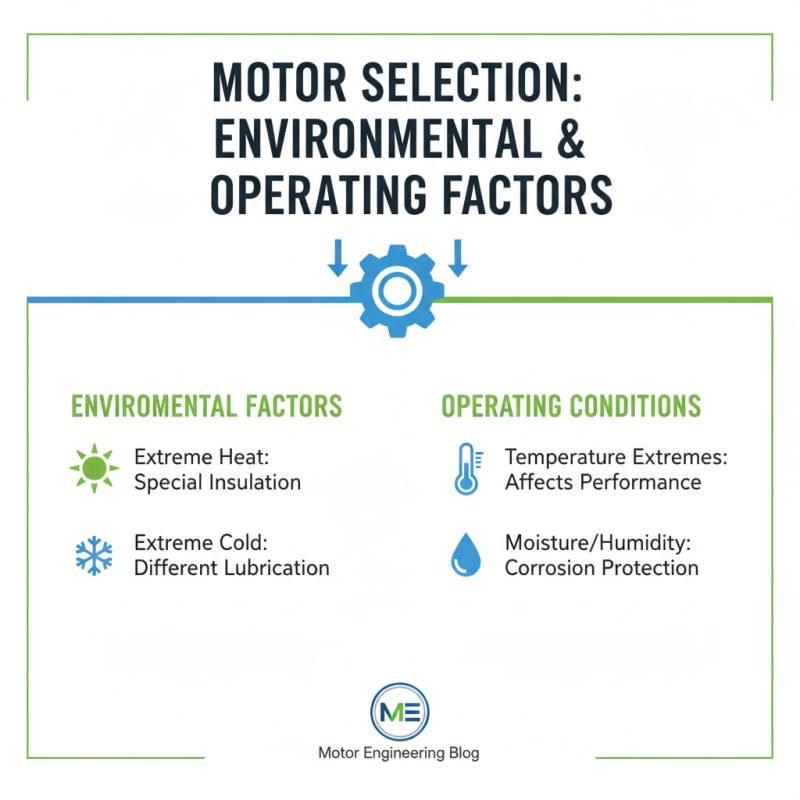
Choosing a motor for industrial applications requires careful consideration of environmental factors and operating conditions. For instance, temperature extremes can significantly affect motor performance. If a motor operates in high heat, it may need special insulation materials to prevent failure. On the other hand, motors exposed to cold might require a different lubrication type to function well.
Humidity is another critical environmental factor. In damp conditions, motors are susceptible to corrosion. This wear can lead to reduced efficiency and short lifespan. Protective coatings or enclosures should be utilized to mitigate such issues. Similarly, dust and particulate matter in the air can impair motor function. Filtration systems may help keep motors running smoothly in such environments.
Reflecting on these factors reveals that the right motor is more than just about specifications. Understanding the specific conditions where a motor will operate is essential. Inadequate consideration of these factors can lead to operational failures. Evaluating environmental impacts during selection enhances reliability and performance. Each application may present unique challenges, requiring a tailored approach to motor selection.
Analyzing Cost-Effectiveness and Maintenance Needs in Motor Choices
When selecting a motor for industrial applications, cost-effectiveness and maintenance are key factors. Not all motors are created equal. A lower initial price might seem attractive, but hidden costs can arise. Energy consumption plays a huge role in overall expenses. High-efficiency motors may cost more upfront, but they can significantly reduce energy bills over time. Similarly, consider the motor's lifespan. A cheaper motor may require more frequent replacements, negating its initial savings.
Maintenance needs also vary widely among different motor types. Some motors require regular lubrication and part replacements. Others are designed for minimal upkeep. It is essential to assess your operational capacity to handle maintenance tasks. A complex motor may offer higher performance but demands regular attention. On the other hand, a simpler design can minimize downtime. Yet, over time, you might realize that the trade-off for simplicity impacts productivity.
Balancing these factors requires a nuanced approach. It’s easy to overlook the long-term implications of your choice. Industrial environments are dynamic. Market conditions and operational needs can shift. Reflecting on past motor choices can provide valuable insights. Ask yourself if a prior selection aligned with maintenance capabilities and budget constraints. This kind of introspection is essential for making informed decisions in the future.