How to Choose the Best Refrigeration Controller?
Choosing the best Refrigeration Controller is not simply a matter of selecting the most advanced model. The right choice depends on temperature stability, system size, refrigerant type, energy targets, and maintenance conditions. A controller installed in a supermarket freezer faces different demands from one used in a cold-storage warehouse. Small details matter, including sensor placement, relay capacity, alarm visibility, and network compatibility.
Dr. Michael Kauffeld, a respected refrigeration technology expert, has emphasized, “Reliable temperature control is essential for protecting product quality and improving refrigeration efficiency.” This principle should guide every purchasing decision. A capable Refrigeration Controller should respond quickly to temperature changes, manage compressor cycling smoothly, and prevent unnecessary defrost operations. It should also provide clear fault signals when sensors fail or doors remain open.
Look beyond the specification sheet. Test the interface. Review the wiring requirements. Ask how technicians will diagnose faults at 2 a.m. A controller may offer impressive connectivity, yet still be difficult to configure. That is a practical weakness.
Energy savings also deserve careful attention. Poor control settings can increase compressor starts, create temperature swings, and shorten equipment life. However, efficiency claims are not always comparable. They may depend on climate, load patterns, and installation quality. This is where many buyers need to think again.
The best Refrigeration Controller is usually the one that balances accuracy, durability, usability, and long-term support. It should fit the real system, not merely look impressive in a catalogue.
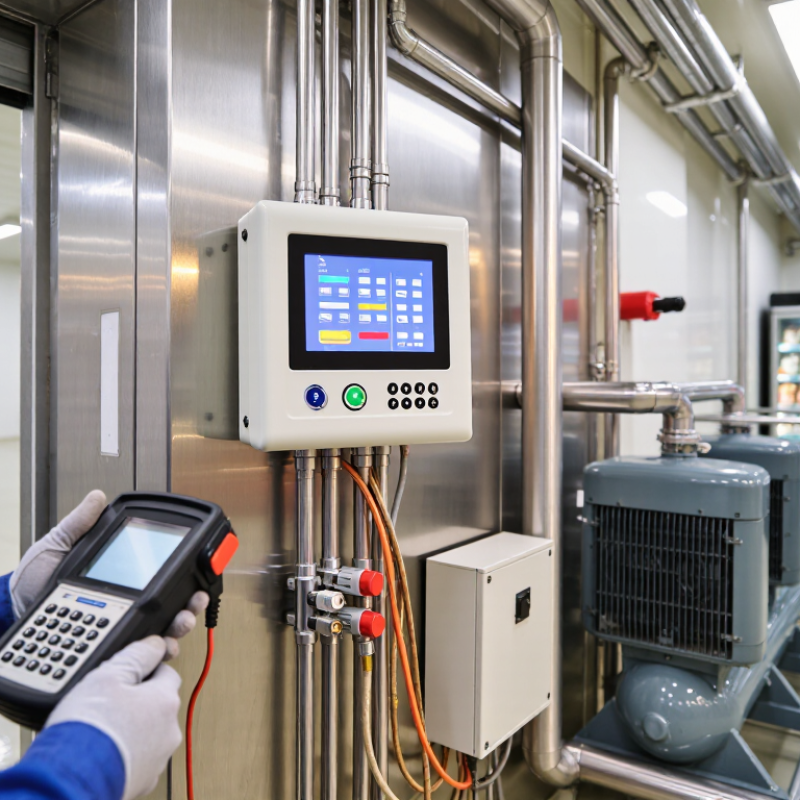
Understanding the Role of a Refrigeration Controller
A refrigeration controller is the system’s decision-maker. It reads temperature sensors, compares measurements with set points, and directs the compressor, fans, and defrost cycle. This coordination protects stored products from unstable conditions. It also helps reduce unnecessary energy use.
Choosing one requires more than checking a temperature range. Consider sensor accuracy, relay capacity, response time, alarm functions, and data recording. A controller should suit the cabinet, cold room, or transport unit. It must also handle frequent door openings, warm product loads, and changing room temperatures. Clear displays matter. During maintenance, a confusing interface can delay a simple adjustment.
In practical inspections, sensor placement often causes more problems than the controller itself. A probe near an evaporator may read colder than the product area. The system then stops cooling too early. That detail is easy to miss. I have also seen operators lower the set point when the real issue was a damaged door seal. More cooling was not the answer. Reliable controllers should support high and low temperature alarms, but alarms only work when someone responds to them. Remote monitoring can help, although poor network coverage may create false confidence. Selection should include installation conditions, service access, and calibration needs. The most advanced unit is not always the best choice. Simplicity can be safer.
Comparing Essential Control Features and Specifications
How to Choose the Best Refrigeration Controller?
Comparing control features matters more than choosing the longest specification sheet. The International Institute of Refrigeration estimated that refrigeration uses about 17% of global electricity. That figure makes control accuracy financially important. A suitable controller should maintain stable temperatures, limit compressor cycling, and support efficient defrost schedules.
Accuracy matters. Look for temperature control within ±0.5°C when stored products require tight limits. Check sensor resolution, probe compatibility, and adjustable differential settings. A narrow differential can reduce temperature swings, but it may increase relay wear. A wider setting saves starts, yet risks product quality. The right balance depends on the cabinet, load, and door-opening frequency.
Alarm functions deserve equal attention. Choose adjustable high and low temperature alarms, sensor-failure alerts, and delayed notifications after door opening. Data logging can reveal short cycling, failed defrosts, or overnight temperature drift. Small errors compound. The IEA’s The Future of Cooling report projects cooling demand could more than triple by 2050, increasing pressure to control energy use carefully. Compare relay capacity, defrost outputs, communication options, enclosure protection, and operating temperature range. Do not guess. A controller rated for a laboratory may perform poorly in a humid preparation room. I would also test recovery after a power interruption, because elegant specifications cannot replace practical evidence.
How to Choose the Best Refrigeration Controller?
Comparing Essential Control Features and Specifications
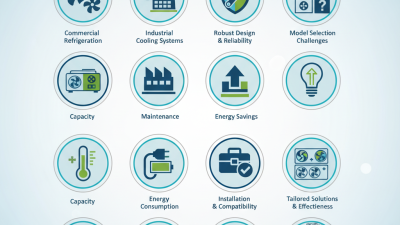
The chart presents practical selection benchmarks for commercial refrigeration applications. A suitable controller commonly supports a wide temperature setting range, at least two temperature inputs, multiple relay outputs for compressors and fans, scheduled defrost control, and independent alarm inputs. Actual requirements depend on the refrigeration system, cabinet type, sensor configuration, and electrical load.
Evaluating Reliability, Energy Efficiency, and Long-Term Value
Choosing a refrigeration controller requires more than comparing purchase prices. In field audits, unstable temperature probes often cause unnecessary compressor cycling, product loss, and repeated service calls. A reliable controller should record temperature trends, detect sensor failure, and trigger clear alarms before shelves become unsafe. It should also recover smoothly after power interruptions. Simple systems are often easier to maintain.
Energy efficiency deserves careful measurement. The U.S. Department of Energy reports that refrigeration can consume 40–60% of a grocery store’s electricity. Small control improvements can therefore influence operating costs significantly. Look for adaptive defrost, floating suction pressure control, and accurate fan management. The International Energy Agency’s 2018 cooling report projects cooling energy demand could more than triple by 2050. That makes efficient control increasingly important, not optional.
Long-term value depends on measurable performance, not impressive specifications. Request trial data showing temperature stability, defrost frequency, alarm response, and annual energy use. Check whether technicians can replace sensors without replacing the entire unit. Open communication protocols may reduce future integration costs, although compatibility claims can be overstated. I would also question systems promising rapid payback without site-specific calculations. Real stores have door openings, dirty coils, seasonal loads, and human mistakes. The controller must perform there.
Sources: U.S. Department of Energy, Energy Efficiency in Grocery Stores; International Energy Agency, The Future of Cooling, 2018.