2026 How to Choose the Right Piston Compressor for Your Needs?
Choosing the right piston compressor is crucial for various applications. A piston compressor compresses air by using a reciprocating motion. Understanding your specific needs can help you select the right model.
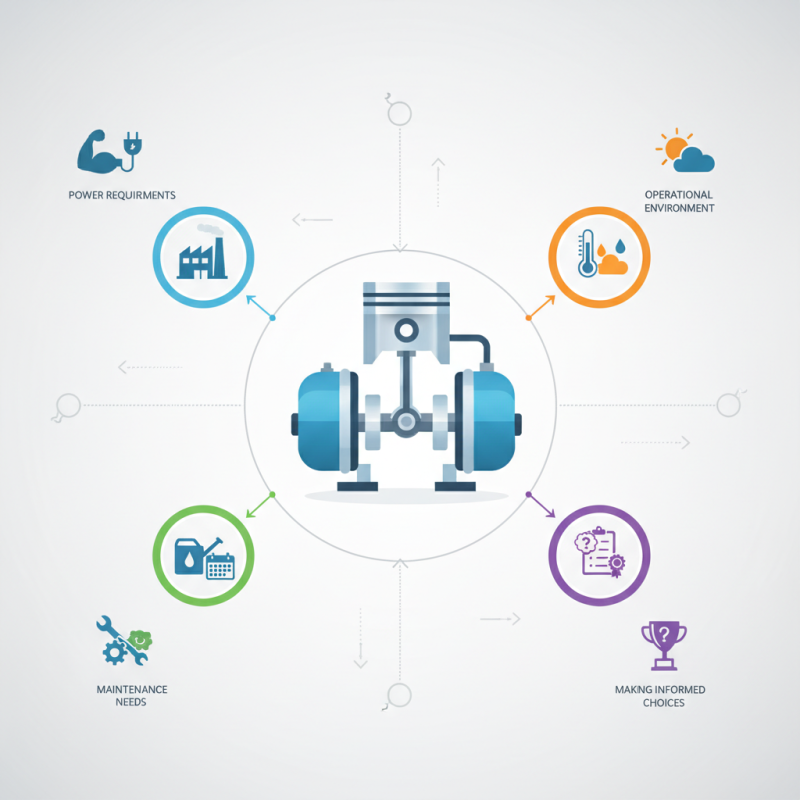
Consider the power requirements. Smaller models can power basic tools. Larger units may be necessary for industrial applications. Each type has strengths and weaknesses that can impact performance and efficiency.
Assessing your operational environment is also key. Factors like temperature and humidity can affect function. Don't overlook maintenance needs either. Regular upkeep ensures reliability and longevity. This selection process may seem complex, yet it is essential for achieving optimal performance. Reflecting on these factors can guide you to make informed choices about your piston compressor.
Understanding the Basics of Piston Compressors
Piston compressors are crucial in various industrial applications due to their efficiency and reliability.
Understanding the fundamentals of these compressors can aid in selecting the right one for your specific needs.
A piston compressor works by using a piston to compress air, making it suitable for high-pressure applications.
According to industry reports, about 60% of manufacturing sectors rely on these compressors for air supply.
One key feature of piston compressors is their versatility.
They come in different types, such as single-stage and two-stage, each serving distinct purposes.
The single-stage compressor is ideal for lighter tasks, operating at lower pressures.
In contrast, a two-stage compressor can handle higher pressures, making it suitable for more demanding applications.
Tips: When choosing a piston compressor, consider the required pressure range and airflow.
Assess the environment and space where it will be installed.
Proper maintenance is vital; regular checks can prevent costly breakdowns.
A study showed that preventive maintenance can extend the compressor lifespan by 30%.
This highlights the importance of making informed decisions based on specific operational needs and conditions.
Identifying Your Specific Air Compression Requirements
Choosing the right piston compressor begins with understanding your specific air compression needs. Different applications require different pressure and airflow levels. For instance, home garages often need lower pressure for tools, while industrial settings demand higher pressures for heavy machinery. An accurate assessment of where and how you will use the compressor is crucial.
Consider the tools you plan to operate. Nail guns, paint sprayers, and other air-powered tools each have unique air requirements. Measure the CFM (cubic feet per minute) and PSI (pounds per square inch) ratings necessary for your tools. Do not overlook the importance of continuous vs. intermittent use. This distinction can significantly impact the type of compressor you choose.
Reflect on the space and portability too. Larger units provide more power but take up space. Smaller, portable units are ideal for DIY projects but may lack capacity. Analyze if you need a stationary compressor or one that you can move easily. Identifying these variables can help narrow down your choices and lead to better long-term satisfaction with your compressor selection.
2026 How to Choose the Right Piston Compressor for Your Needs?
| Specification |
Requirements |
Recommended Capacity (CFM) |
Typical Applications |
| Noise Level |
Quiet Operation Needed |
5-10 CFM |
Home Workshop, Dental Clinics |
| Pressure Requirement |
High Pressure Needed |
10-20 CFM |
Automotive Repair, Painting |
| Portability |
Portable for Job Sites |
5-10 CFM |
Construction, DIY Projects |
| Continuous Operation |
Needed for Prolonged Use |
20-50 CFM |
Industrial Applications, Manufacturing |
| Electric vs Gas |
Electrical Supply Available |
10-30 CFM |
Workshops, Factories |
Evaluating Key Features of Piston Compressors
When choosing a piston compressor, assessing key features is crucial. Piston compressors are widely used due to their efficiency and versatility. Industry reports indicate that nearly 50% of small businesses prefer piston compressors for their cost-effectiveness and ease of maintenance. Understanding the specifications can help you make a more informed choice.
Power capacity is one of the first features to consider. Different applications require varying horsepower. For instance, light tasks may suffice with a 5 HP unit, while heavy usage could need upwards of 15 HP. Noise levels also vary greatly. Some models operate quietly, while others may exceed 90 dB. This can impact workplace comfort, especially in smaller environments.
Another vital aspect is tank size. A larger tank allows for longer operation periods without needing to recharge. The optimal tank size often correlates with your specific air demands. Furthermore, the maintenance requirement should not be overlooked. Regular checks on oil levels and air filters can prolong the compressor’s lifespan, yet they are often neglected. Evaluating these factors will guide you towards a piston compressor that fits your needs better.
Comparing Different Brands and Models of Piston Compressors
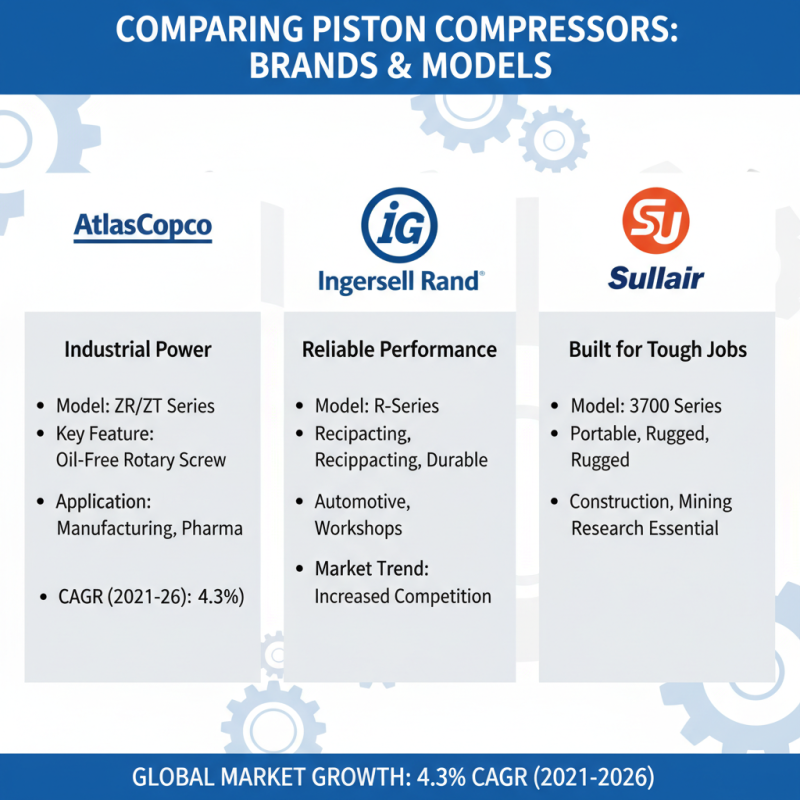
Choosing the right piston compressor involves understanding various brands and models. The market is filled with options, and each brand has unique features and specifications. According to recent industry reports, the global piston compressor market is expected to grow at a compound annual growth rate of 4.3% from 2021 to 2026. This growth implies an increase in competition among brands, making it essential to research.
When comparing different models, look for metrics such as CFM (Cubic Feet per Minute) and PSI (Pounds per Square Inch). A model with a high CFM is suitable for heavy-duty tasks. Not every model will meet all your needs. Some compressors are quieter but less powerful. Users often overlook maintenance requirements or energy efficiency ratings. These factors greatly influence overall performance and cost-effectiveness.
In the selection process, consider the intended application. HVAC systems may require specialized compressors. Conversely, light-duty tasks can be managed with smaller, portable models. Data from industry analysis suggests that choosing the wrong type can lead to operational inefficiencies. Evaluate each option critically. Avoid focusing solely on price; reliability and service support matter.
Maintenance and Care Tips for Longevity and Efficiency
Maintaining a piston compressor is essential for its longevity and efficiency. Regular upkeep can prevent costly repairs and enhance performance. One important tip is to check the oil levels frequently. Piston compressors rely on proper lubrication to function smoothly. Low oil levels can lead to significant wear and damage. Always use the oil recommended by the manufacturer for optimal results.
Another vital aspect is monitoring the air filters. Clogged filters restrict airflow, causing the compressor to work harder. This not only decreases efficiency but can also lead to overheating. Clean or replace filters regularly to maintain airflow. A simple inspection can make a significant difference.
Lastly, vibrations can indicate underlying issues. If you notice excessive noise or shaking, investigate promptly. This could signal loose components or misalignment. Regularly tighten screws and ensure all parts are secure. Following these care tips will help keep your piston compressor running effectively for years to come.
Performance Comparison of Piston Compressors