Top Types of Refrigeration Evaporators Explained
In the realm of refrigeration technology, the role of the Refrigeration Evaporator is paramount. According to a recent report by the International Institute of Refrigeration, over 50% of the refrigeration energy consumed globally is attributed to evaporators. This key component directly impacts efficiency and overall performance. Understanding the different types of refrigeration evaporators can enhance operational effectiveness and reduce energy costs.
The primary function of a Refrigeration Evaporator is to absorb heat from within a refrigerated space. This process not only keeps the environment cool but also ensures the freshness of perishable goods. However, choosing the right evaporator type is often overlooked. Many industries struggle with inefficiencies due to inadequate evaporator selection. As highlighted by a study from ASHRAE, improper evaporator sizing can lead to a 20% increase in operational costs.
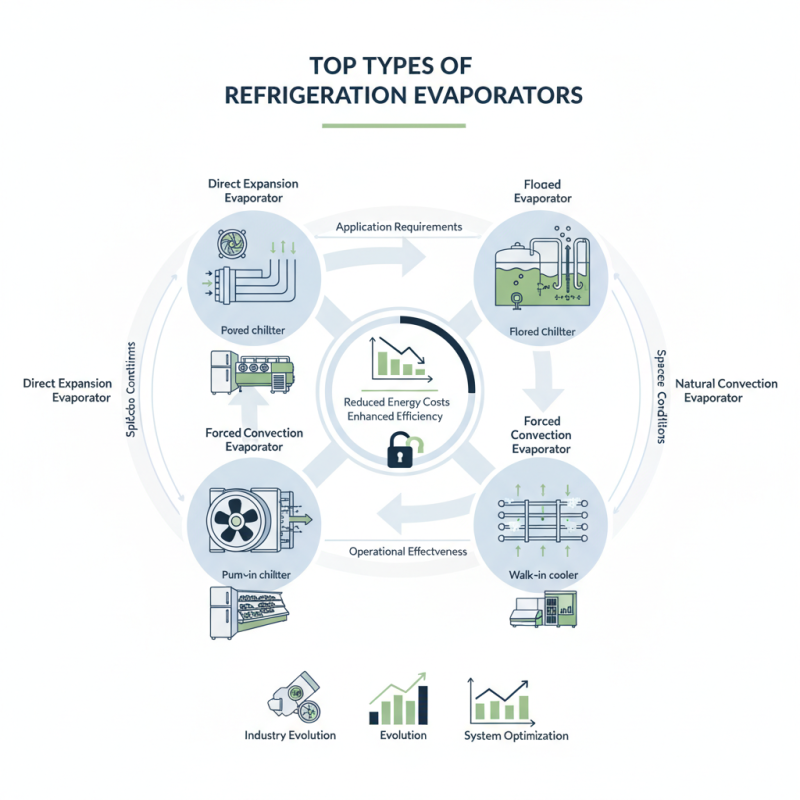
When exploring refrigeration options, professionals must consider various factors. These include application requirements, space constraints, and environmental conditions. The variety of evaporators—from direct expansion to flooded systems—offers unique advantages and challenges. As the industry evolves, staying informed about these critical components is essential for optimizing system performance.
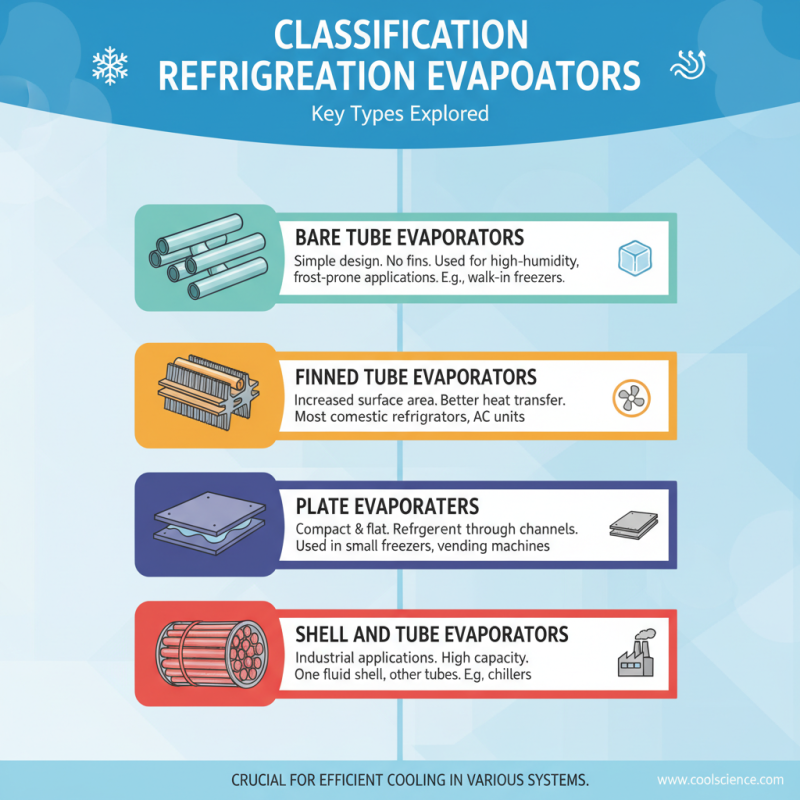
Classification of Refrigeration Evaporators: Key Types Explored
Refrigeration evaporators play a crucial role in the cooling process. They are essential components in various refrigeration systems. Understanding their classification helps in selecting the right type for specific applications. There are several key types to explore.
The direct expansion (DX) evaporator is widely used. It operates by allowing refrigerant to expand directly in the evaporator coils. This process absorbs heat from the surrounding air or liquid. Consequently, it cools the environment effectively. Another relevant type is the flooded evaporator. In this system, the refrigerant circulates in liquid form, enhancing heat transfer efficiency. This system can be complex but is effective in larger installations.
We also have the shell and tube evaporator. This type involves refrigerant circulating through tubes, with another fluid passing around them. While it is versatile, it requires careful monitoring of the fluids involved. The plate evaporator is a compact option. It uses a series of thin plates to facilitate heat exchange. However, it may not handle larger capacities efficiently. Each type of evaporator has its strengths and weaknesses, warranting consideration based on specific refrigeration needs. Understanding these differences can lead to better decision-making in refrigeration system design.
Understanding the Working Principles of Evaporator Types in Refrigeration
In refrigeration systems, evaporators play a crucial role. They absorb heat from the environment to provide cooling. There are several types of evaporators, including direct expansion, flooded, and dry evaporators. Understanding their principles can enhance efficiency. For example, direct expansion evaporators use refrigerant directly to absorb heat. Reports suggest that they can achieve up to 90% efficiency in specific applications.
Flooded evaporators, on the other hand, operate with an excess of refrigerant. This design allows for larger heat exchange surfaces. According to a recent study by the International Institute of Refrigeration, these units can perform better in industrial settings. They maintain consistent temperatures, but proper maintenance is needed to avoid inefficiencies.
Dry evaporators require careful monitoring. They must maintain the right refrigerant levels, as low levels can lead to overheating. This operational flaw may result in significant energy waste. Interestingly, industry surveys indicate that many facilities undervalue the importance of regular audits on evaporator performance. Conducting these checks can lead to substantial cost savings and improved reliability.
Comparative Analysis of Direct Expansion vs. Flooded Evaporators
When discussing refrigeration evaporators, it’s essential to understand the differences between direct expansion and flooded evaporators. Each type has unique features and benefits. Direct expansion (DX) evaporators use refrigerant that expands directly in the evaporator coil. This method is efficient and straightforward in design. They fit smaller spaces and maintain uniform cooling. However, they may struggle with rapid temperature fluctuations.
Flooded evaporators, on the other hand, maintain a constant flow of refrigerant. This design ensures better heat exchange but requires more space and careful monitoring. They can handle varying loads and are often more reliable. The constant liquid refrigerant helps avoid temperature distribution issues. Reliability may sometimes be questioned due to increased complexity.
Tips: When selecting an evaporator type, consider the space available and the cooling load. Evaluate your maintenance capabilities, as flooded systems may need more oversight. Always assess the initial installation costs versus long-term efficiency. Balancing these factors can be challenging yet crucial for optimal performance.
Top Types of Refrigeration Evaporators Explained - Comparative Analysis of Direct Expansion vs. Flooded Evaporators
| Evaporator Type |
Operation Principle |
Efficiency |
Applications |
Pros |
Cons |
| Direct Expansion |
Refrigerant evaporates directly in the coil. |
High efficiency under varying loads. |
Commercial refrigeration, air conditioning. |
Compact design, easy installation. |
Temperature fluctuations can occur. |
| Flooded Evaporator |
Refrigerant is in constant contact with the coil. |
Stable performance across loads. |
Industrial refrigeration, large chillers. |
Consistent temperature control. |
More complex and expensive to install. |
| Combined Systems |
Incorporates features of both systems. |
Versatile with varying efficiency. |
Food processing, pharmaceutical applications. |
Flexibility in operation. |
May require careful management. |
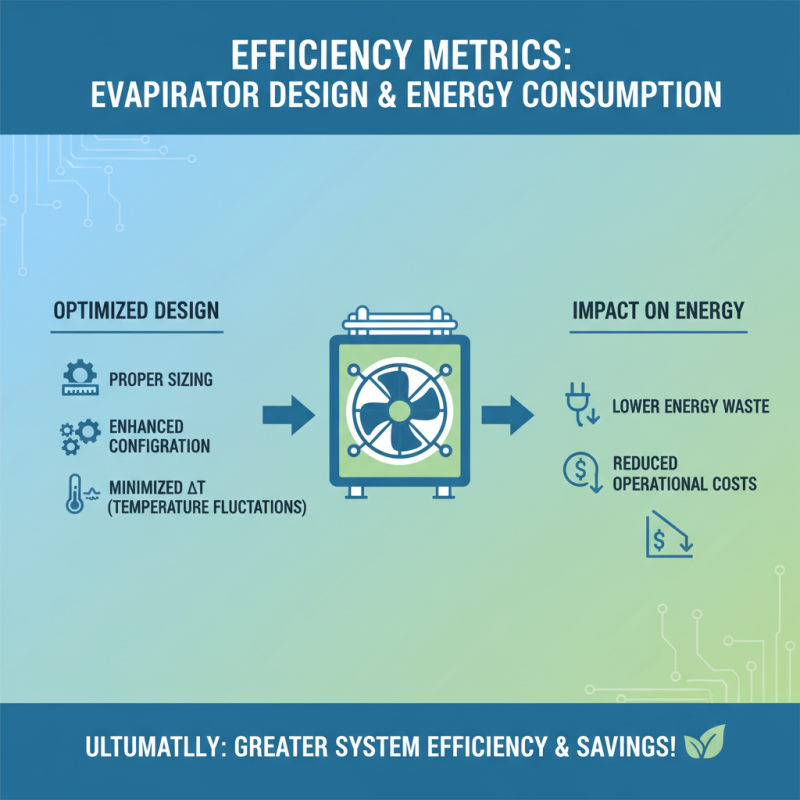
Efficiency Metrics: Impact of Evaporator Design on Energy Consumption
The design of refrigeration evaporators significantly influences energy consumption. Proper sizing and configuration can enhance overall system efficiency. A well-designed evaporator minimizes temperature fluctuations, thus optimizing cooling performance. This leads to less energy waste, ultimately lowering operational costs.
When evaluating evaporator design, several key metrics come into play. Heat transfer efficiency is crucial. An evaporator with high heat transfer capabilities will extract heat more effectively. This allows for a better cooling effect with less energy input. In contrast, poorly designed evaporators often lead to energy losses, resulting in higher electricity bills and reduced system lifespan.
Materials used in evaporators also affect energy efficiency. Corrosion-resistant materials can ensure longevity and reliability. However, these materials may come at a higher initial cost. Choosing the right balance between initial investment and long-term savings is vital. Reflecting on these considerations helps ensure that energy consumption remains as low as possible while still meeting refrigeration needs.
Applications of Various Evaporators in Industrial and Commercial Settings
Refrigeration evaporators play a crucial role in both industrial and commercial settings. Their design and functionality can vary greatly based on specific applications. For example, direct expansion (DX) systems are widely used in supermarkets. They efficiently cool large spaces, enabling optimal preservation of perishable goods. Another common type is the flooded evaporator, often found in larger facilities. These systems operate with a surplus of refrigerant, offering high cooling capacity for industrial environments.
Tips: Ensure proper maintenance of evaporators. Regular cleaning helps prevent ice buildup. Monitor performance to catch issues early.
In food processing plants, plate evaporators are favored for their compact design. They provide effective heat transfer while occupying minimal space. However, these units may not be suitable for all applications. Assessing the specific cooling needs is vital before choosing an evaporator type.
Tips: Consider space limitations when selecting an evaporator. Understand the cooling load requirements to enhance efficiency.