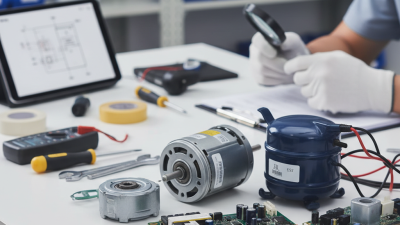
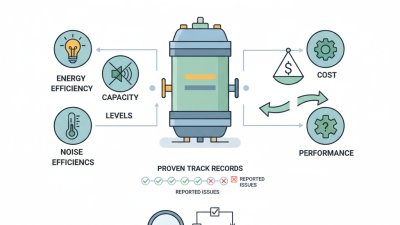
Choosing the right Bristol Compressor in 2026 requires more than comparing cooling capacity or purchase price. Global buyers must examine refrigerant compatibility, voltage, oil management, sound levels, service access, and expected operating conditions. A compressor that performs well in a cool warehouse may struggle in a hot coastal plant. Small details matter. Pipe length matters. Ambient temperature matters.
HVAC industry specialist André Patenaude puts the principle plainly: “Compressor selection must begin with the system, not the catalog.” This view is especially relevant when evaluating Bristol Compressor options for supermarkets, cold rooms, transport refrigeration, and industrial process cooling. Buyers should review displacement, motor protection, starting performance, and control compatibility before approving a shipment. Regional power standards also deserve careful attention. A seemingly minor mismatch can create expensive commissioning problems.
This guide examines the leading Bristol Compressor types expected to attract global attention in 2026. It considers reciprocating designs, application ranges, efficiency trends, maintenance demands, and practical purchasing risks. The analysis also recognizes an uncomfortable reality: published performance data may not reflect every installation. Field conditions are rarely perfect. Technicians may face restricted airflow, inconsistent voltage, or delayed spare parts.
That uncertainty deserves honest consideration. The best choice is not always the newest model. It is the model that fits the system, operating environment, and service capability. Careful buyers will verify technical documentation, confirm supplier support, and question assumptions before placing an order.
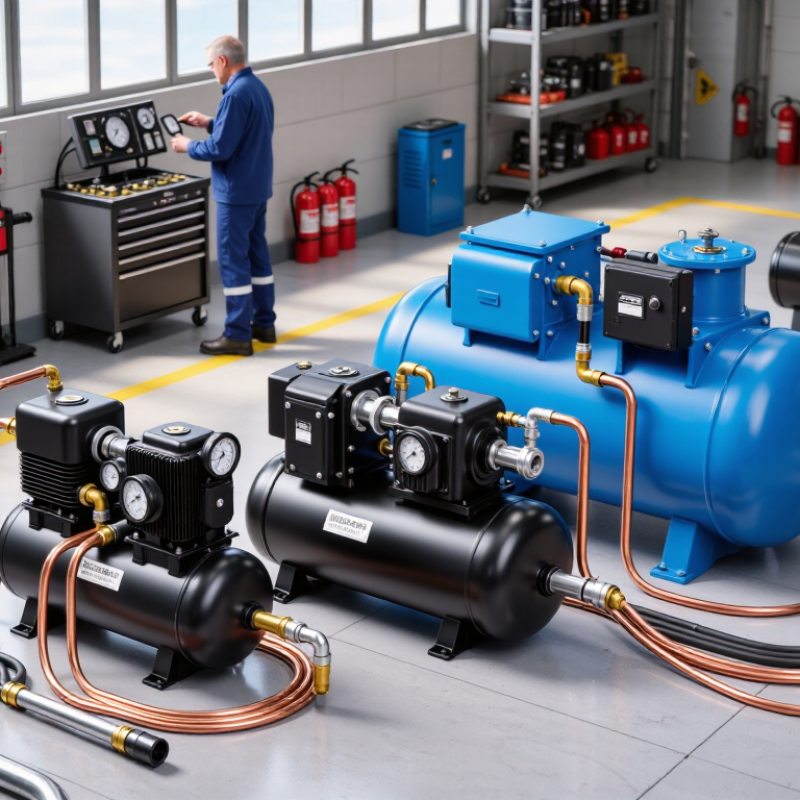
The term refers to a compressor product family used in residential, commercial, and light industrial cooling systems. These units move refrigerant through a sealed cycle, creating pressure differences that produce cooling. Common designs include scroll and reciprocating compressors. Scroll models usually offer smooth operation and fewer moving parts. Reciprocating models can suit systems requiring flexible capacity control. In field inspections, I check vibration, oil condition, wiring, and discharge temperature before judging performance.
The product range is usually organized by compressor design, cooling capacity, refrigerant type, motor voltage, and application. A small residential unit may support a compact air conditioner, while larger models serve rooftop equipment or commercial refrigeration. Selection should match the evaporator load, condenser conditions, and starting requirements. A model with higher capacity is not automatically better. That assumption causes costly oversizing and short cycling. Catalog descriptions can also feel too simple, so engineers should verify operating maps and approved refrigerants.
Tips: Compare the required capacity with actual peak load. Check voltage and frequency carefully. Confirm refrigerant compatibility before ordering. Leave space for service access. I would also record sound levels during operation, because a quiet test bench may not reflect a crowded installation site.
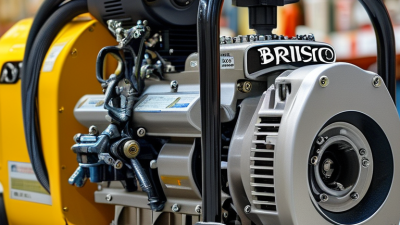
2026 Top Bristol Compressor Types for Global Buyers
Main Bristol Compressor Types and Their Operating Principles
For global buyers, compressor selection should begin with the operating cycle, not the catalogue label. The main types are scroll and reciprocating designs. Scroll compressors use two spiral elements. One orbiting scroll moves around a fixed scroll. Gas pockets shrink gradually, raising pressure with limited pulsation. This design suits air-conditioning and heat-pump systems. It is compact and usually quiet. Yet, it can be sensitive to liquid refrigerant and installation debris.
Reciprocating compressors rely on pistons, cylinders, valves, and a crank mechanism. During suction, the piston moves down and draws refrigerant inward. It then rises, compresses the gas, and sends it through the discharge valve. These compressors handle varied load conditions and higher pressure demands well. They may also produce stronger vibration and require more attention to oil return. Field experience shows that incorrect piping can undermine even a well-built unit. That point is easy to overlook.
Buyers should compare displacement, cooling capacity, refrigerant compatibility, voltage, and starting current. Ambient temperature matters too. A scroll unit may perform smoothly in a clean, stable system. A reciprocating unit may offer practical flexibility where loads change sharply. However, model data must be checked against actual duty conditions. Published ratings are not promises for every climate. Independent technical review, service access, and documented testing improve purchasing confidence.
| Compressor Type | Operating Principle | Typical Applications | Common Advantages | Selection Considerations |
|---|---|---|---|---|
| Reciprocating (Piston) | A piston moves inside a cylinder, drawing gas in through an intake valve and compressing it as it travels back. The compressed gas exits through a discharge valve. | Refrigeration systems, air conditioning, workshops, and industrial processes requiring a range of pressures or intermittent operation. | Can achieve relatively high pressures; available in multiple configurations; often practical for smaller or variable-capacity duties. | Consider vibration, noise, valve and piston maintenance, and the required capacity-control method. |
| Scroll | One fixed scroll and one orbiting scroll form sealed pockets. The pockets move toward the center and become smaller, compressing the gas before discharge. | Residential and commercial air conditioning, heat pumps, and refrigeration equipment. | Few moving parts, generally smooth operation, and compact construction. | Check the approved operating envelope, refrigerant compatibility, liquid-refrigerant protection, and serviceability requirements. |
| Rotary Screw | Two intermeshing helical rotors trap gas and carry it along the rotor length. The trapped volume decreases as the gas moves toward the discharge port. | Industrial compressed-air systems, process gas service, and large refrigeration or cooling installations. | Well suited to continuous operation and steady gas flow; capacity can often be regulated using a slide valve or variable-speed drive. | Oil-injected and oil-free designs differ in gas quality, cooling, and maintenance needs. Confirm required pressure, duty cycle, and oil-separation requirements. |
| Centrifugal | A high-speed impeller accelerates the gas. A diffuser then slows the flow and converts part of its velocity energy into pressure. | Large chillers, central cooling plants, and high-flow industrial applications. | Can handle high flow rates and provide continuous, relatively low-vibration operation at suitable design conditions. | Performance depends on flow and pressure conditions. Assess surge limits, turndown range, inlet conditions, and control requirements. |
| Rotary Vane | An eccentrically mounted rotor turns inside a casing. Sliding vanes form chambers that shrink as they rotate, compressing the trapped gas. | Small air compressors, vacuum pumps, and selected low-to-medium-capacity process duties. | Compact design and relatively continuous gas delivery. | Vane wear, lubrication needs, operating temperature, and maintenance access should be evaluated for the intended duty. |
Compressor choice depends on cooling demand, operating hours, and the rest of the system. Reciprocating compressors suit many small and medium applications, with familiar service procedures and flexible capacity options. Scroll models have fewer moving parts and often run smoothly, but their capacity range may be less flexible. Rotary screw compressors can support steady, higher-load operation; they may be inefficient when repeatedly run far below their design load.
Compare rated capacity at the actual operating conditions, not just the headline figure. A unit’s performance changes with suction and discharge temperatures, and a hot equipment room can narrow its useful range. Check efficiency data at expected loads, plus voltage, frequency, refrigerant, oil, and control compatibility. These details matter. A compressor that fits physically may still conflict with the system’s electrical supply or safety controls. I have seen specifications appear aligned on paper, yet leave questions about low-load performance; confirm those points before purchase.
Tips: Ask for performance tables across your expected temperature range. Verify connections and control signals against the existing system. For variable demand, compare part-load efficiency, not only full-load ratings. Leave room for maintenance access around the unit. Small detail, big difference.
Global buyers should match compressor type to duty cycle, pressure, air quality, and maintenance access. Reciprocating compressors suit workshops, service vehicles, and intermittent pneumatic tools. They deliver strong pressure from a compact frame, but their vibration and pulsation need control. Scroll compressors provide quiet, oil-free air for clinics, laboratories, and small food-processing lines. Capacity remains limited. That matters.
Rotary screw compressors fit factories requiring steady air for packaging, assembly, and machine operation. Variable-speed models can reduce unloaded running, although savings depend on correct sizing. The U.S. Department of Energy reports that compressed air can consume about 10% of industrial electricity. It also notes that leaks may waste 20–30% of compressor output. A good compressor cannot repair poor distribution design.
Centrifugal compressors serve large plants with continuous, high-volume demand, such as chemicals, metals, and utilities. They usually need stable flow and skilled maintenance. For refrigeration and air-conditioning systems, sealed reciprocating, scroll, and rotary compressors match different cooling loads and temperature ranges. The International Energy Agency projects cooling demand will rise sharply as incomes and temperatures increase. Local climate changes the answer. In humid ports, corrosion protection deserves attention; in remote sites, simple service may matter more than peak efficiency. Many buying teams still compare only purchase price. That is an expensive shortcut. Sources: U.S. Department of Energy, Improving Compressed Air System Performance; International Energy Agency, The Future of Cooling.
The chart compares typical discharge pressure levels for widely used compressor technologies. Rotary screw compressors are commonly selected for continuous factory air, centrifugal units for high-volume process air, reciprocating compressors for higher-pressure intermittent duty, scroll compressors for clean and quiet applications, and diaphragm compressors where oil-free gas handling is required.
Values represent typical operating levels and can vary by configuration, gas, temperature, and application requirements.
When sourcing compressors in 2026, global buyers should match the compressor type to the operating load. Reciprocating units suit smaller systems and changing demand. Scroll compressors offer quiet operation for compact commercial applications. Screw models handle steady, continuous workloads with fewer pressure fluctuations. Centrifugal designs can support large facilities, but they need stable flow and careful installation.
Performance data deserves more attention than catalog claims. Check cooling capacity, refrigerant compatibility, voltage, frequency, oil management, and allowable pressure ranges. Ask for test records, efficiency curves, noise data, and service intervals. A unit that looks efficient at full load may perform poorly during seasonal demand. This is where many purchasing plans become too optimistic. I have seen specifications hide practical limitations.
Tips: Request samples of factory inspection reports and confirm serial traceability. Compare lifecycle cost, not only purchase price. Evaluate spare-part availability in the destination country. Confirm packaging, corrosion protection, and technical documents before shipment. Ask whether local technicians can complete commissioning safely. Also, review warranty conditions carefully; unclear exclusions can create expensive disputes. A small calculation error in voltage or capacity can delay an entire project. Leave room for that possibility.