What is a Carlyle Compressor and How Does it Work?
The Carlyle Compressor is a vital component in many refrigeration and air conditioning systems. Known for its reliability and efficiency, it plays a crucial role in cooling mechanisms. This article will explore how the Carlyle Compressor operates and why it is favored in various applications.
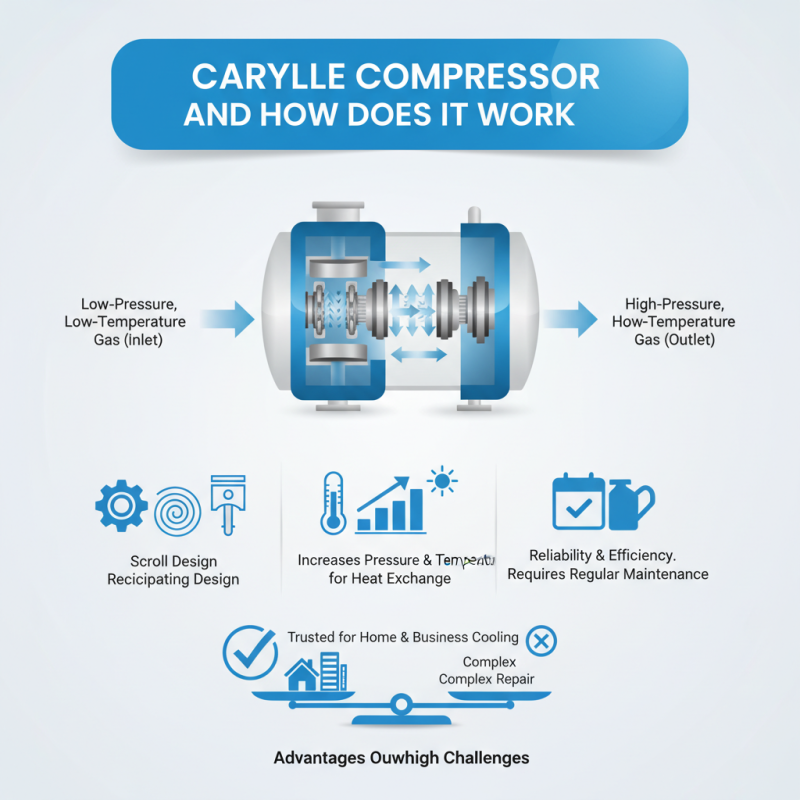
The Carlyle Compressor utilizes a scroll or reciprocating design to compress refrigerant gas. It effectively reduces the volume of gas, thereby increasing its pressure and temperature. This process is essential for heat exchange, allowing systems to provide cooling in homes and businesses. While it is generally efficient, issues like wear over time can affect performance. Regular maintenance is necessary to ensure optimal function.
Understanding the Carlyle Compressor’s workings helps in selecting the right system for specific needs. Its design may present challenges in terms of repair, as some users may find it complex. However, its advantages often outweigh these concerns. Overall, the Carlyle Compressor remains a trusted option for efficient cooling solutions.
What is a Carlyle Compressor?
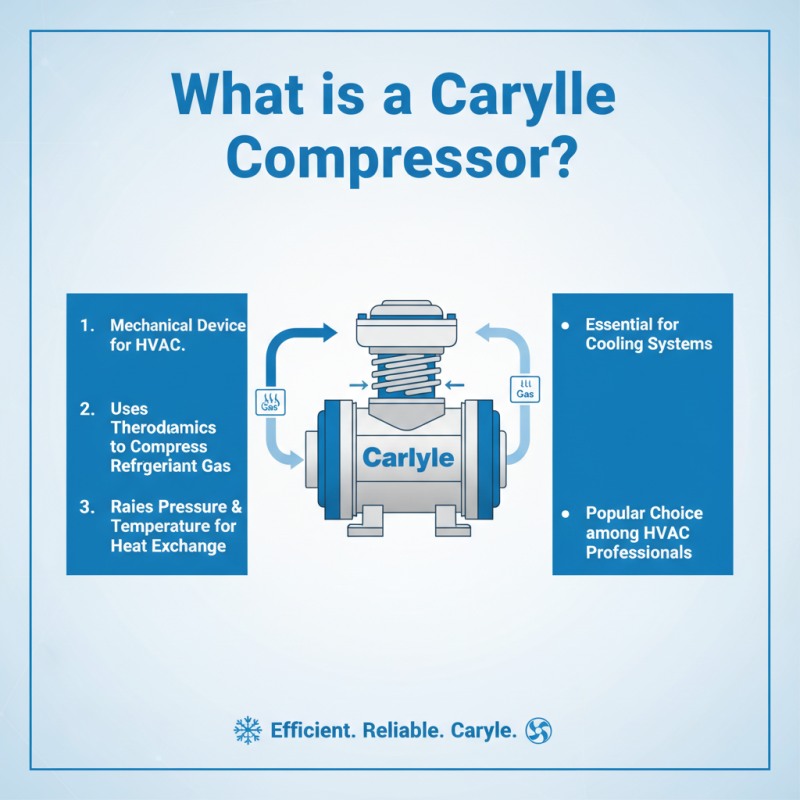
A Carlyle compressor is a type of mechanical device mainly used in refrigeration and air conditioning systems. It operates on the principles of thermodynamics to compress refrigerant gas. By compressing the gas, it raises its pressure and temperature, allowing for efficient heat exchange. This process is essential for cooling systems, making the Carlyle compressor a popular choice among HVAC professionals.
The design of a Carlyle compressor consists of several key components. The crankshaft and pistons work together to compress the refrigerant. This creates a vacuum that draws in low-pressure refrigerant. The compressed gas is then sent to the condenser, where it releases heat and changes back into a liquid state. Understanding this mechanism is crucial for technicians maintaining or repairing these systems.
While the Carlyle compressor is effective, it does have limitations. For instance, if not sized correctly, it can lead to inefficiencies or frequent breakdowns. Regular maintenance is important to ensure longevity. Technicians often overlook minor issues, which can escalate into significant problems. Addressing these concerns proactively can enhance performance and reliability.
History and Development of Carlyle Compressors
Carlyle compressors have a rich history rooted in the evolution of refrigeration technology. Emerging in the early 20th century, these compressors were initially designed for use in commercial refrigeration. Their development mirrored the increasing demand for efficient cooling solutions across various industries. As of 2021, the global market for industrial compressors was valued at over $23 billion, indicating the significant role these devices play in modern applications.
The advancement of Carlyle compressors has been marked by technological innovations. Over the decades, these units have incorporated efficiencies to handle a range of refrigerants. Reports indicate that the energy efficiency of compressors has improved by 20% over the last two decades. This improvement is pivotal considering that HVAC systems can account for nearly 40% of a building’s energy consumption. However, challenges remain. Some older models are still in operation, leading to potential issues with energy use and environmental impact.
Today, Carlyle compressors continue to evolve. They are now at the forefront of the transition to energy-efficient designs. While modern units boast noise reduction and enhanced durability, there is still a significant gap in sustainability. Industry experts highlight the need for continuous improvement in this area. The pursuit of more efficient and environmentally friendly cooling solutions remains critical as the industry faces energy challenges.
Key Components and Design Features of Carlyle Compressors
Carlyle compressors are crucial in the HVAC sector, playing a vital role in many cooling systems. They employ a reciprocating mechanism to compress refrigerants, enabling efficient heat transfer. Understanding the key components of these compressors can help in identifying performance factors and possible issues.
The primary components include the cylinder, piston, and crankshaft. The cylinder houses the refrigerant, while the piston moves within it, increasing pressure. The crankshaft's rotational movement converts motor power into linear motion for the piston. Each part must operate efficiently to ensure optimal performance. Poor synchronization may lead to increased wear and tear.
Tips: Regular maintenance is essential. Check for proper lubrication and wear on moving parts. This can prevent costly repairs later. Keep an eye on the compressor's temperature and vibration levels. Excessive heat can indicate inefficiency.
Another notable design feature is the suction and discharge valves. These valves regulate refrigerant flow into and out of the cylinder. If these valves are damaged, the compressor can struggle to maintain proper pressure. Regular inspection is important. Look for signs of leakage or misalignment, which can hinder performance. Always document performance trends for better diagnostics.
What is a Carlyle Compressor and How Does it Work? - Key Components and Design Features of Carlyle Compressors
| Component |
Function |
Materials Used |
Design Features |
| Compressor Cylinder |
Compresses refrigerant gas |
Cast Iron |
High strength and corrosion resistant |
| Piston |
Moves up and down to compress the gas |
Aluminum Alloy |
Lightweight and efficient heat transfer |
| Crankshaft |
Converts rotary motion to linear motion |
Forged Steel |
High durability and wear resistance |
| Valves |
Regulate gas flow in and out of the cylinder |
Stainless Steel |
Enhanced sealing and longevity |
| Oil Pump |
Lubricates moving parts |
Aluminum and Steel |
Efficient oil delivery system |
How Carlyle Compressors Operate: The Mechanics Explained
Carlyle compressors are essential in various refrigeration and air conditioning applications. Their operation is based on the principle of gas compression, crucial for cooling systems. These compressors utilize a piston-driven mechanism to compress refrigerant gas, increasing its pressure and temperature before it moves to the condenser.
The mechanics behind Carlyle compressors involve several vital components. The piston moves within a cylinder, drawing in the refrigerant gas through an inlet valve. As the piston rises, pressure builds within the cylinder, leading to gas compression. Data shows that the efficiency of these compressors can reach over 90% in optimal conditions. However, factors like temperature fluctuations and improper maintenance can reduce this efficiency significantly.
Understanding the intricacies of Carlyle compressors informs better practices. For instance, regular maintenance can prevent mechanical failures. Reports highlight that nearly 30% of compressor failures result from insufficient lubrication. Ensuring components are regularly checked can enhance reliability and lifespan. Awareness of these operational mechanics can lead to smarter decisions in managing refrigeration systems.
Common Applications and Uses of Carlyle Compressors
Carlyle compressors are widely used in refrigeration and air conditioning systems. Their versatility makes them suitable for various applications across different industries. In commercial refrigeration, for instance, these compressors efficiently maintain the required temperatures in walk-in coolers and food display cases.
Data from the International Institute of Refrigeration indicates that around 30% of global electricity consumption comes from refrigeration and air conditioning systems. Carlyle compressors contribute to reducing this energy use with their advanced designs. They often utilize variable speed technology to adjust their output based on cooling demands. This feature enhances energy efficiency, proving crucial in industries like food processing and pharmaceuticals, where precise temperature control is vital.
Additionally, Carlyle compressors play a significant role in industrial applications. For example, in HVAC systems for large commercial buildings, the compressors help regulate indoor climate effectively. The integration of smart technology enables predictive maintenance, increasing reliability but also posing challenges. Many users need to adapt to the new systems, which can be complex. This learning curve highlights the importance of training in optimizing compressor performance in real-world settings.