China Best LG Compressor Supplier for Global Buyers?

Choosing the right China supplier for a Lg Compressor requires more than comparing online prices. Global buyers need dependable specifications, verified production capacity, and clear communication throughout the order.

Experienced importers usually examine compressor models, cooling capacity, refrigerant compatibility, voltage, noise levels, and energy performance. A serious supplier should provide datasheets, serial traceability, product photographs, and practical testing records. Factory visits or live video inspections can reveal important details, including warehouse conditions, packaging quality, and final inspection procedures.

Small details matter.

A reliable Chinese supplier should understand different market requirements, shipping documents, and installation conditions. Buyers should also confirm whether the offered Lg Compressor is genuine, compatible with the intended system, and supported by an appropriate warranty. Certification claims deserve careful checking through valid documents and recognized testing organizations. Clear answers are valuable, but evidence is stronger.

Not every low-cost quotation represents real savings. Poor packaging, delayed spare parts, or unclear after-sales support can increase the final cost. In my experience, the best supplier is not always the largest factory. It is the partner that communicates accurately, identifies technical risks, and accepts reasonable quality inspections.

Some evaluations may remain uncertain.

Therefore, global buyers should compare several Chinese suppliers using the same technical checklist. Sample testing, contract details, production updates, and shipment inspections can reduce avoidable surprises. This article explores how to assess China’s leading Lg Compressor suppliers with a practical and responsible approach. It also recognizes an uncomfortable truth: supplier performance can change over time, so ongoing verification remains necessary.
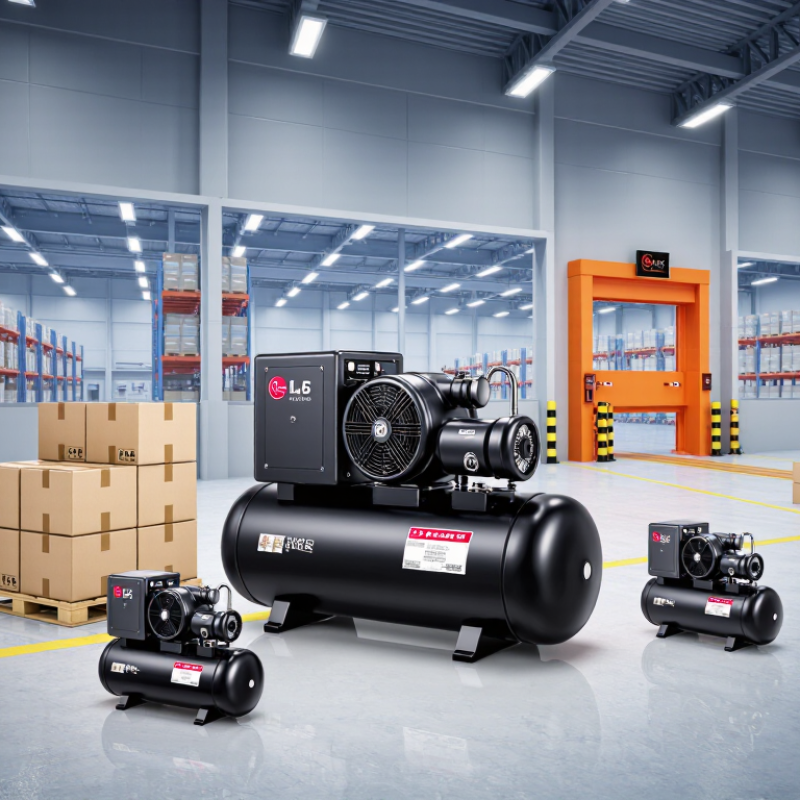
China Best LG Compressor Supplier for Global Buyers?

What Defines a Reliable LG Compressor Supplier for Global Buyers?

A reliable compressor supplier must prove performance beyond a product brochure. The IEA’s The Future of Cooling report projects that cooling electricity demand could more than triple by 2050. Buyers therefore need suppliers that measure efficiency, noise, vibration, and long-term operating stability.

Look for documented testing under different voltage, ambient temperature, and load conditions. A serious supplier should provide test records, batch traceability, warranty terms, and replacement procedures. Certification to ISO 9001 supports process control, but it does not automatically guarantee product quality. Ask for the actual audit scope. Small details matter, such as sealed packaging, dry storage, and clear serial-number records.

Refrigerant compatibility also deserves careful review. The UNEP 2023 Cooling Emissions and Policy Synthesis Report highlights the industry’s continuing shift toward lower-emission cooling solutions. Suppliers should explain oil compatibility, refrigerant limits, safety controls, and regional compliance requirements. Request independent laboratory evidence where possible. Supplier claims can be polished.

In practical purchasing, response time reveals operational maturity. Can the supplier identify a failed unit from photos, pressure readings, and running current? Can it maintain stable specifications across repeat orders? Experience shows that some vendors offer attractive prices but weak technical follow-up. That risk is easy to underestimate. A dependable partner combines engineering support, transparent data, consistent production, and honest limits.


How to Evaluate LG Compressor Quality, Compatibility, and Performance

Choosing a reliable compressor supplier requires more than comparing prices. Quality begins with traceable production records, consistent materials, and careful end-of-line testing. Ask for serial-level inspection data, not only a general certificate.

A practical evaluation starts with the nameplate and application requirements. Confirm refrigerant type, voltage, frequency, displacement, mounting dimensions, and oil specification. A small mismatch can cause overheating or poor cooling. Check terminal insulation, weld quality, and protective coatings under bright light. I also recommend measuring winding resistance before installation. It can reveal uneven production results.

Performance testing should include starting current, running current, discharge temperature, suction pressure, and vibration. Test readings should remain stable after continuous operation, not only during a short demonstration. Listen for metallic noise or repeated cycling. These details often expose problems hidden by attractive packaging.

Compatibility includes more than physical fit. Review the expansion device, condenser capacity, control settings, and electrical protection together. A compressor may perform well alone but fail inside an unbalanced system. That mistake is easy to make.

Independent laboratory reports add confidence, especially when they match field records. Still, paperwork has limits. My early inspections trusted clean documents too quickly. Now, I compare samples from different batches and request failure analysis when results seem unusual. Keep a spare unit for bench testing. It saves time when performance claims need verification.

Refrigerant Compatibility Reference for Global Compressor Buyers

Global buyers should confirm that a compressor is designed for the selected refrigerant, pressure range, lubricant, cooling capacity, and applicable safety requirements. The chart compares commonly encountered refrigerants by 100-year global warming potential (GWP100), using IPCC AR4 values.

Lower GWP does not by itself indicate higher compressor quality or efficiency. Before approving a supplier, verify certified cooling capacity, COP or EER at the required operating conditions, discharge temperature, sound level, oil compatibility, starting performance, endurance testing, and compliance with local regulations.

Which LG Compressor Models Suit Different Refrigeration Applications?

Compressor selection should begin with the refrigeration load, not the supplier’s catalogue. The International Energy Agency reports that cooling consumed about 10% of global electricity in 2018. Its projections show cooling demand could more than triple by 2050. Efficiency matters at every temperature range.

For household refrigerators and small display cabinets, compact rotary or reciprocating models usually fit best. They offer simple control, low vibration, and practical installation dimensions. Small inverter versions suit applications with frequent door opening. They reduce cycling losses, though their electronics need better protection.

For medium cold rooms, scroll models can provide smooth operation and stable efficiency. Variable-speed control helps during partial loading. That detail is often ignored.

Frozen storage needs a different approach. Low-temperature reciprocating models can manage deeper suction temperatures and stronger compression ratios. Larger warehouses may require semi-hermetic reciprocating or screw systems.

Engineers should check the operating envelope, oil return, discharge temperature, starting current, and refrigerant compatibility. One attractive efficiency figure is not enough.

The 2023 Global Cooling Watch report warns that cooling demand may more than triple by 2050 without efficiency improvements. A dependable Chinese supplier should therefore provide certified performance data, sound-level results, dimensional drawings, and batch traceability.

Ask for testing under EN 12900 conditions when possible. Field experience still matters. A model that performs well in a laboratory may struggle in a dusty workshop with unstable voltage. That is where many purchasing decisions need more reflection.

What Certifications and Export Capabilities Should Suppliers Provide?

A reliable compressor supplier should prove more than production capacity. Request ISO 9001 certification, with its scope covering design, manufacturing, and testing. ISO’s Survey 2023 recorded 1,265,216 ISO 9001 certificates worldwide, so certification alone is not enough. Verify the certificate number, issuing body, validity, and factory address. ISO 14001 and ISO 45001 can also indicate stronger environmental and workplace controls. For the compressor itself, request applicable safety and performance test reports, material declarations, and refrigerant compliance documents.

Export capability requires practical evidence. Ask for commercial invoices, packing lists, certificates of origin, bills of lading, and accurate HS classification examples. The World Bank’s Logistics Performance Index 2023 evaluates customs, infrastructure, international shipments, logistics competence, tracking, and timeliness. A supplier should explain each area clearly. Request export records for similar markets, container-loading photos, moisture-protection methods, and approved Incoterms. Packaging matters. A damaged terminal box can erase a perfect factory test.

Tips: Check one recent shipment from order to delivery. Match the purchase order, serial numbers, test records, and customs documents. Do not accept edited screenshots. I would also ask for a batch traceability sample. Many suppliers promise it, but cannot provide records quickly. That is a warning sign. Buyers should review certificates annually, because documents expire and factory scopes can change. Audits should include rejected units, not only polished production lines.

How to Compare LG Compressor Suppliers on Price, Service, and Reliability

Choosing a Compressor Supplier in China for Global Buyers

Comparing suppliers requires more than reading the lowest quotation. A practical review starts with the complete landed cost, not the unit price alone. Ask whether the quote includes testing, export packing, documentation, spare parts, and freight support. A cheap compressor can become expensive after delays, revisions, or missing accessories.

Service quality appears in small details. Does the supplier answer technical questions within one business day? Can its engineers provide performance curves, wiring information, and installation guidance? During supplier audits, I also check replacement-part availability and warranty procedures. Clear service records often reveal more than polished sales presentations. Reliability deserves physical evidence. Request batch traceability, inspection reports, operating limits, and sample-test results. Independent pre-shipment inspections can verify noise, vibration, dimensions, and electrical performance.

Do not trust promises alone.

I once accepted a competitive offer because the specification looked complete. Later, the delivery schedule changed, and several technical drawings needed correction. That experience taught me to compare communication quality before signing. A dependable supplier should explain limitations honestly, including production capacity and testing boundaries. Still, no evaluation is perfect. Factory visits can show strong systems, yet daily consistency may vary. Use trial orders, measurable acceptance criteria, and written response times. Price matters, but predictable support and stable performance protect the buyer’s operation over many service years.

China Best LG Compressor Supplier for Global Buyers? - How to Compare LG Compressor Suppliers on Price, Service, and Reliability

Comparison Dimension Practical Market Benchmark What Global Buyers Should Verify Recommended Weight Buyer Evaluation Rule
Quoted Unit Price Compare on the same model, voltage, refrigerant, frequency, and Incoterm. The lowest quotation is not necessarily the lowest total cost. Request a written quotation showing unit price, tooling or setup charges, export packing, inland freight, insurance, and destination-related charges. 20% Prefer transparent and comparable quotations.
Total Landed Cost Product price + freight + insurance + duties + inspection + expected service cost. Calculate cost per usable unit, including estimated replacement freight and customs documentation expenses. 10% Select the lowest verified total cost, not only the lowest ex-works price.
Minimum Order Quantity Common purchasing arrangements range from sample orders of 1–5 units to production orders of 20–100+ units. Confirm whether the MOQ applies per model, per voltage, per refrigerant, or per shipment. 5% A lower MOQ reduces inventory risk for testing and new projects.
Production Lead Time Stock orders may ship within 3–10 business days; standard production commonly takes 20–45 business days. Ask for the lead time after payment, drawing approval, and confirmation of technical specifications. 10% Require a written delivery schedule and delay-notification procedure.
Warranty Coverage A commercial warranty of 12 months from shipment or 12 months from installation is commonly offered. Check coverage period, excluded conditions, evidence requirements, spare-part responsibility, and freight allocation. 10% Prefer clear written terms rather than an informal warranty promise.
Quality Documentation Each shipment should be traceable to a model, batch, serial number, and production date. Request datasheets, performance curves, electrical specifications, inspection records, packing lists, and certificates applicable to the destination market. 10% Complete documentation lowers customs, installation, and after-sales risk.
Pre-Shipment Testing Basic checks should include electrical safety, insulation, leakage, appearance, and operating performance where applicable. Confirm test standards, sampling level, test records, calibration status, and whether third-party inspection is accepted. 10% Use independent inspection for high-value or first-time orders.
Technical Response Time A well-organized export support team should acknowledge technical inquiries within 1 business day. Test response quality before ordering by sending questions about application, refrigerant, voltage, oil, capacity, and installation conditions. 8% Score accuracy and completeness, not response speed alone.
Complaint and Replacement Process A documented process should define evidence collection, root-cause analysis, corrective action, and replacement timing. Request the procedure for damaged goods, early failure, incorrect specifications, and missing accessories. 7% Avoid suppliers that provide no written resolution timeline.
Export Packaging Packaging should protect against vibration, moisture, corrosion, and handling damage during international transport. Verify pallet type, carton or crate specification, moisture protection, shock indicators, labels, and container-loading photos. 5% Packaging should match the transport route and destination climate.
Payment and Commercial Risk Common arrangements include a deposit before production and balance before shipment, subject to negotiation. Confirm beneficiary details through an independent channel and align payment milestones with inspection and shipping documents. 5% Use extra controls for first orders or unfamiliar trading entities.