How to Choose the Right Panasonic Compressor?
Choosing the right Panasonic Compressor starts with the application, not the catalogue number. Room size, refrigerant, voltage, ambient temperature, noise limits, and expected operating hours all matter. A compressor that performs well in a small inverter air conditioner may be unsuitable for a refrigerated display case or a heat pump. Check the operating envelope carefully, especially at low suction pressure and high condensing temperature.
The International Energy Agency reports that global space-cooling demand could more than triple by 2050 without stronger efficiency improvements. That pressure makes seasonal efficiency, part-load performance, and refrigerant compatibility essential selection criteria. Panasonic’s rotary and scroll compressor designs can offer different advantages, but the best choice depends on the system’s real duty cycle. A larger model is not automatically better. Oversizing may increase cycling, noise, and energy waste.
As refrigeration specialist Dr. Srinivas Garimella has stated, “The compressor is the heart of the refrigeration system.” That principle remains practical when comparing a Panasonic Compressor. Review capacity tables, start-up current, oil type, acoustic data, and approved refrigerants. Confirm electrical protection and installation requirements with the manufacturer’s documentation. Field experience also matters: a quiet compressor on a clean test bench may behave differently in a hot plant room. This guide uses Panasonic technical information, IEA cooling data, and engineering practice to explain the choice. Some assumptions may still fail. Test them before purchase.
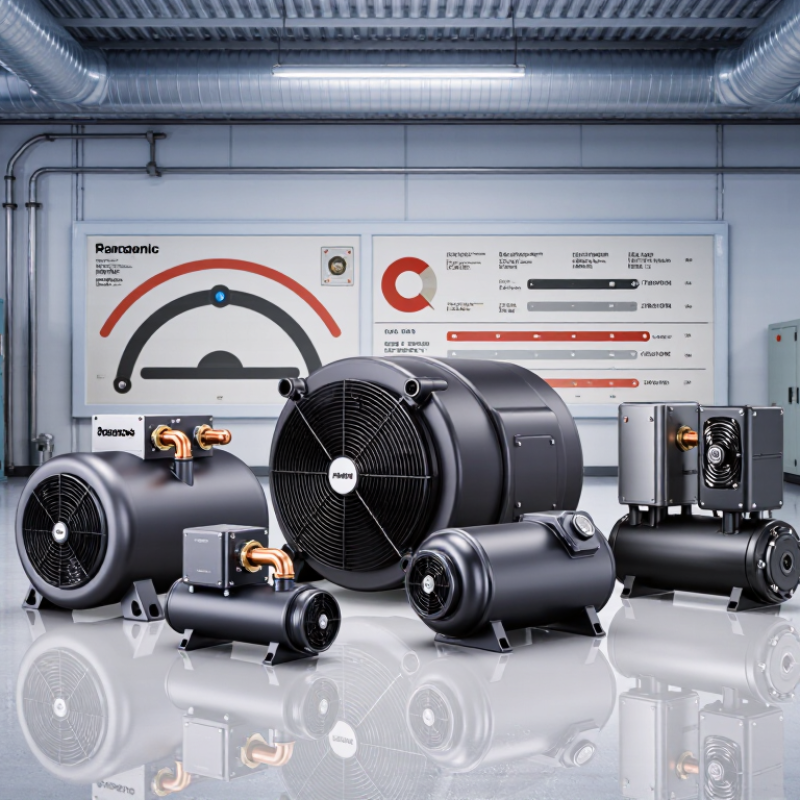
Panasonic Compressor Types and Their Primary Applications
Choosing the right compressor begins with its application, not its catalogue appearance. Rotary compressors suit compact room air conditioners and light refrigeration. Their small footprint helps in apartments and shop displays. Reciprocating compressors handle demanding low-temperature refrigeration and service conditions. They are often practical where technicians need accessible components. Scroll compressors support heat pumps, commercial air conditioning, and quieter indoor systems. Variable-speed compressors adjust output as room loads change, reducing frequent starts and stops.
The International Energy Agency reported that cooling electricity demand could triple globally by 2050 without stronger efficiency measures. This makes capacity control increasingly important. The U.S. Department of Energy also links variable-speed operation with improved seasonal efficiency in suitable systems. However, efficiency claims depend on installation quality, airflow, refrigerant charge, and outdoor temperature. A compressor selected only by horsepower may perform poorly. I have seen units fail early because return-gas temperature was ignored. That detail is easy to miss.
Tips: Match compressor type with evaporating temperature, condensing temperature, refrigerant, oil, and electrical supply. Check certified performance data under realistic conditions, not only laboratory ratings. AHRI rating procedures can help compare capacity and efficiency consistently. Leave room for imperfect assumptions. A building’s real load may differ from the design estimate. Measure operating pressures, vibration, and cycling after installation. For cold rooms, prioritize low-temperature capability and stable oil return. For homes, consider sound levels, modulation range, and part-load efficiency. The quietest option is not always the most reliable.
Key Specifications to Match With Your Cooling Requirements
How to Choose the Right Compressor: Key Specifications to Match With Your Cooling Requirements
Choosing a compressor starts with the cooling load, not the catalog photograph. Measure the required capacity in watts or tons under actual indoor and outdoor conditions. A 2018 International Energy Agency report projects global cooling electricity demand could more than triple by 2050. Efficiency matters increasingly. Compare COP, EER, or seasonal efficiency at the temperatures your system will truly experience.
Check refrigerant compatibility, displacement, voltage, frequency, and the permitted operating envelope. A compressor rated for 230 volts may perform poorly when supply voltage fluctuates. Confirm starting current before selecting electrical protection. Also review oil type, suction temperature, discharge temperature, and maximum pressure. The ASHRAE Handbook emphasizes that rating conditions strongly affect capacity and efficiency. A laboratory result is not always a field result.
Modulation deserves attention.
Variable-speed operation can follow partial loads more efficiently than repeated on-off cycling. However, the control system must support stable low-speed operation. Noise and vibration also need practical testing beside occupied rooms. My own selection mistakes usually begin with trusting one performance point. That is risky. Compare several load conditions. A tidy spreadsheet can still hide poor defrost behavior, high startup demand, or inadequate cooling during peak heat. The UNEP-led 2023 Global Cooling Watch report also highlights efficiency as a major route for reducing future cooling demand. Choose a compressor only after matching its specifications to climate, duty cycle, refrigerant, and maintenance capability.
Selection Criteria for Reliability, Maintenance, and Total Cost
Selecting the right compressor starts with the operating conditions, not the purchase price. Record the refrigerant, cooling capacity, suction temperature, discharge pressure, and expected running hours. Small details matter.
In field assessments, I also check the compressor’s duty cycle and installation environment. A unit working near dust, heat, or vibration needs stronger protection. Choose a model with stable performance under realistic loads, not only laboratory conditions. Review certified test data, operating limits, warranty terms, and service support before approval. A safety margin is useful, but excessive capacity can cause short cycling and wasted energy.
Maintenance requirements directly affect reliability. Ask whether technicians can reach filters, terminals, oil ports, and inspection points without removing nearby equipment. Clear service manuals reduce mistakes. Keep records of vibration, temperature, current, and oil condition. These readings often reveal trouble before failure. Do not rely on sound alone.
The total cost includes energy, spare parts, labor, downtime, and disposal. Compare expected annual consumption over the equipment’s working life. A cheaper compressor may become expensive after repeated repairs. I once focused too heavily on the initial quote and overlooked access limitations. That decision increased labor costs. It was a useful lesson. Leave room for uncertain conditions, because real installations rarely match the spreadsheet perfectly. Reliability is measured over years, not during delivery week.
How to Choose the Right Compressor?
Selection criteria for reliability, maintenance, and total cost of ownership
This planning model gives the greatest weight to reliability and maintenance because refrigeration systems may operate continuously throughout the year. Total cost should include purchase, installation, energy consumption, scheduled service, and unplanned downtime over the expected service life.