China Top Refrigeration Scroll Compressor Suppliers?
Choosing China’s top Refrigeration Scroll Compressor suppliers requires more than comparing catalog prices. A reliable supplier must match cooling capacity, refrigerant type, voltage, and operating conditions. These details affect energy use, noise, service life, and system stability.
This guide examines manufacturers through practical purchasing criteria. It considers factory experience, compressor testing, quality controls, export performance, and technical support. Readers should check displacement, rated input power, COP, oil compatibility, starting current, and allowable pressure ranges. A compressor that performs well in a laboratory may behave differently in a busy cold-storage room. Real operating conditions matter.
Look beyond polished websites.
Supplier verification also deserves attention. Buyers can request test reports, product drawings, warranty terms, and batch traceability records. Factory audits may reveal assembly standards, inventory capacity, and testing equipment. References from refrigeration contractors can provide useful evidence, although they are not perfect. Market rankings change, and public information may remain incomplete. This guide therefore avoids claiming that one company suits every project.
Fit matters more.
The strongest suppliers usually combine stable production with responsive engineering support. They can explain model selection, refrigerant transitions, installation limits, and maintenance requirements clearly. They should also communicate honestly when a model is unsuitable. That response often reveals more than a sales presentation. By comparing technical evidence, service reliability, and total ownership cost, buyers can create a more defensible shortlist of Chinese suppliers for commercial, industrial, and specialized refrigeration applications. Mistakes are still possible, so final decisions should include independent technical review and site-specific validation.
China Refrigeration Scroll Compressors: 1.5–60 HP Capacity Overview
China Refrigeration Scroll Compressors: 1.5–60 HP Capacity Overview
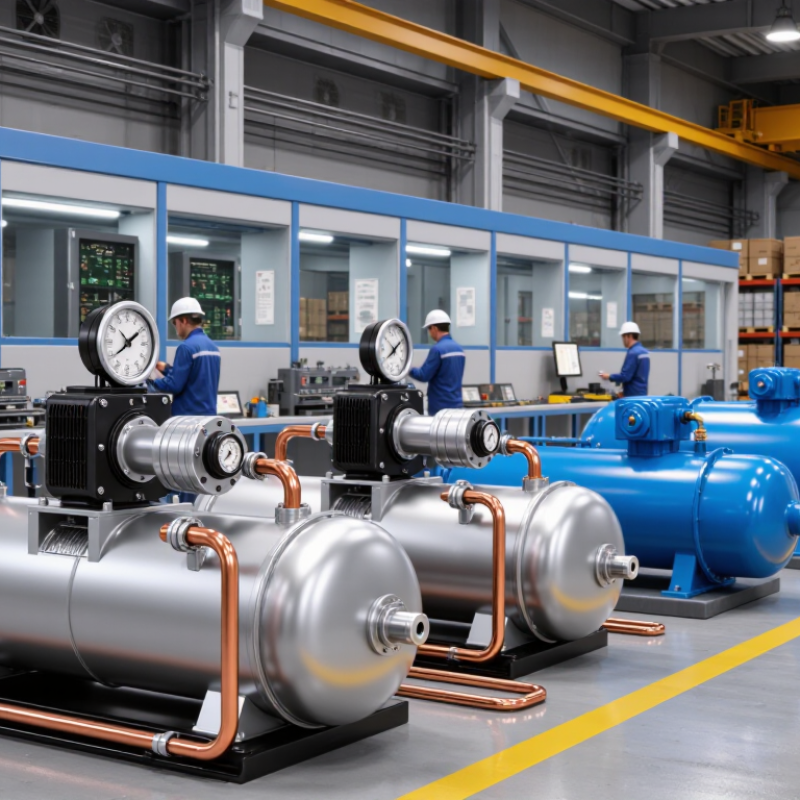
China’s refrigeration scroll compressor suppliers commonly cover capacities from 1.5 to 60 HP. Smaller 1.5–5 HP models suit reach-in coolers, compact cold rooms, and supermarket display cases. Units from 7.5–20 HP often support medium-sized cold storage, food processing rooms, and air-cooled condensing systems. Larger 25–60 HP compressors serve distribution centers, industrial refrigeration, and multi-compressor racks. Fit matters.
Capacity alone does not determine performance. Engineers should check refrigerant compatibility, evaporating temperature, condensing temperature, oil return, voltage, and seasonal load changes. Inverter and digital modulation options can reduce cycling during partial-load operation. However, control quality depends on commissioning. A strong compressor cannot repair poor piping, incorrect superheat, or inadequate airflow. Real systems are less tidy.
During supplier evaluation, request performance tables at several operating points, not only rated conditions. Review acoustic data, vibration control, motor protection, thermal limits, and documented endurance testing. Ask for serial traceability, inspection records, spare-part availability, and clear warranty procedures. These details reveal manufacturing discipline. Field experience also shows that oversized compressors may short-cycle, waste energy, and increase mechanical stress. Smaller models can struggle during pull-down periods. My own assessment would never rely on horsepower alone; actual load calculations and site conditions deserve more attention. Availability is useful, but verified data is safer.
Comparing COP and EER Under AHRI 540 Rating Conditions
China Top Refrigeration Scroll Compressor Suppliers?
When comparing Chinese refrigeration scroll compressor suppliers, COP and EER deserve close attention. AHRI Standard 540-2020 defines performance rating methods for positive-displacement refrigerant compressors and compressor units. It considers rating points, refrigerant conditions, suction superheat, discharge pressure, and electrical input. These details affect every published result.
COP is the cooling capacity divided by power input. EER expresses the same relationship in Btu/h per watt. Under identical conditions, 1 COP equals approximately 3.412 EER. However, supplier datasheets may use different evaporating temperatures, condensing temperatures, or frequency settings. A larger EER number is not automatically better. Check the test conditions.
Look closely.
The International Energy Agency reported in The Future of Cooling that global space-cooling electricity demand could rise from about 2,000 TWh in 2016 to 6,200 TWh by 2050. Efficiency comparisons therefore need reliable testing, not attractive marketing tables. AHRI 540 data can support a fair shortlist, especially when capacity, input power, sound, and operating limits are listed together. Field experience also matters: oil return, cycling, voltage stability, and performance at part load can change real results. A neat spreadsheet can still mislead. I would ask each supplier for certified test records and repeatable conditions before ranking performance.
China Top Refrigeration Scroll Compressor Suppliers? - Comparing COP and EER Under AHRI 540 Rating Conditions
Representative anonymous supplier benchmark for hermetic refrigeration scroll compressors. Values are engineering comparison figures and should be confirmed against certified AHRI 540 test reports before procurement.
| Supplier ID |
Scroll Compressor Configuration |
Nominal Motor
Power (HP) |
Refrigerant |
SST / SCT
(°F) |
Cooling Capacity
(kW) |
Power Input
(kW) |
COP
(W/W) |
EER
(Btu/Wh) |
Oil Type |
Typical Application |
| Supplier A |
Single-stage, fixed-speed hermetic scroll |
5 |
R-410A |
45 / 130 |
10.8 |
3.38 |
3.20 |
10.92 |
POE |
Commercial air conditioning |
| Supplier B |
Single-stage, fixed-speed refrigeration scroll |
6 |
R-404A |
20 / 120 |
12.5 |
4.03 |
3.10 |
10.58 |
POE |
Medium-temperature refrigeration |
| Supplier C |
Variable-capacity scroll with digital modulation |
4 |
R-32 |
45 / 130 |
8.6 |
2.87 |
3.00 |
10.24 |
POE |
Light commercial HVAC |
| Supplier D |
Tandem-ready, fixed-speed scroll |
7.5 |
R-410A |
45 / 130 |
15.2 |
5.07 |
3.00 |
10.24 |
POE |
Packaged rooftop systems |
| Supplier E |
Low-temperature refrigeration scroll |
10 |
R-448A |
0 / 110 |
18.0 |
5.63 |
3.20 |
10.92 |
POE |
Cold rooms and frozen-food equipment |
| Supplier F |
Compact, single-stage hermetic scroll |
3 |
R-454B |
45 / 130 |
6.5 |
2.26 |
2.88 |
9.82 |
POE |
Residential and light commercial systems |
Technical notes: COP = cooling capacity ÷ compressor power input. EER = COP × 3.412. SST means saturated suction temperature, and SCT means saturated condensing temperature. Actual AHRI 540 ratings vary with refrigerant, return-gas temperature, subcooling, voltage, frequency, and compressor operating envelope.
R32 (GWP 675), R410A (GWP 2,088), and R290 (GWP 3.3) Compatibility
China’s top refrigeration scroll compressor suppliers are judged by more than production volume. Their refrigerant compatibility must be proven through repeatable testing and clear technical records.
R32 has a GWP of 675 and often requires careful discharge-temperature control. A suitable scroll compressor should handle its pressure range, oil return, and motor insulation demands. R410A carries a GWP of 2,088, yet remains common in existing air-conditioning equipment. Suppliers should provide pressure maps, operating envelopes, and long-duration test data for this refrigerant.
R290 has a very low GWP of 3.3. It is also highly flammable. That changes the design conversation. Compressors intended for R290 systems need suitable electrical protection, leak-control planning, and compliance documentation. Factory engineers should verify start-up behavior, vibration, noise, and thermal stability under real load changes. Laboratory data matters.
So does field experience.
When comparing Chinese suppliers, request samples, serial-level traceability, oil specifications, and failure-analysis reports. Check whether the stated R32, R410A, or R290 compatibility applies to the complete system, not only the compressor shell. This detail is easy to miss. I have seen performance claims weakened by mismatched expansion valves or poor airflow. Supplier audits should include calibration records and incoming-material controls. Some documents may look complete but lack test conditions. Ask for them. A reliable supplier accepts technical questions and admits operating limits. That is not weakness. It is useful engineering honesty.
China Top Refrigeration Scroll Compressor Suppliers? — Refrigerant GWP Compatibility
This chart compares the 100-year Global Warming Potential (GWP) values of common refrigerants used with refrigeration scroll compressor systems. R290 has the lowest climate impact, while R410A has the highest GWP among the three. Refrigerant compatibility depends on compressor design, pressure rating, lubricant, seals, electrical protection, and safety requirements; a compressor designed for one refrigerant should not be converted to another without manufacturer approval.