How to Choose the Right Refrigeration Compressor for Your Needs?
Choosing the right refrigeration compressor is crucial for efficiency and performance. A refrigeration compressor is the heart of any refrigeration system. It ensures that the system maintains optimal temperatures for various applications. Selecting an unsuitable compressor can lead to increased energy costs and reduced efficiency.
Understanding your specific needs is vital. Different compressors work better for distinct situations. Factors such as size, cooling capacity, and environmental conditions matter. Many people overlook these details. This can lead to suboptimal choices. Consulting with experts can provide valuable insights. Their experience can guide you in selecting a reliable solution.
Quality should not be compromised. A good refrigeration compressor should have a solid warranty and support. Look for established brands known for durability. This ensures long-term reliability and performance. Remember, a well-chosen compressor can save you time and money. Reflect on your decision carefully before making a purchase.
Factors to Consider When Choosing a Refrigeration Compressor
Choosing the right refrigeration compressor is crucial for efficient cooling. Several factors impact this decision. One significant aspect is the type of refrigerant your system uses. Different compressors operate best with specific refrigerants. Understanding this compatibility is essential to avoid inefficiencies.
Another important consideration is the load requirements of your refrigeration system. Think about how much heat the system needs to remove. Higher loads may need more powerful compressors. It's also vital to assess the efficiency ratings. An energy-efficient compressor can lead to significant savings over time.
Noise levels can be a factor too. Some compressors operate quietly, while others may be loud. If noise is a concern, prioritize quieter models. Maintenance needs should not be overlooked. More complex compressors may require specialized care. Evaluating these factors can help you find a reliable solution that meets your refrigeration needs.
Types of Refrigeration Compressors and Their Applications
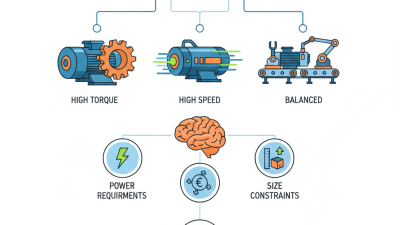
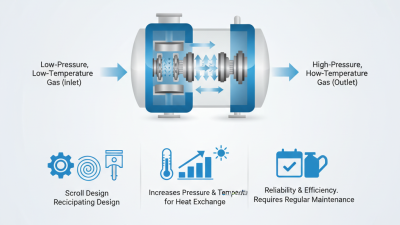
When selecting a refrigeration compressor, understanding the different types is crucial. Each compressor type serves specific applications, influenced by factors like efficiency needs and system size. The three main types are reciprocating, rotary, and scroll compressors. Reciprocating compressors are robust and widely used in commercial refrigeration. They excel in high-efficiency scenarios but may require more maintenance.
Rotary compressors are compact and quiet, making them ideal for residential refrigerators. Their simplicity allows for fewer moving parts, which can lead to reliability issues over time. Scroll compressors, known for their efficiency, are popular in both air conditioning and refrigeration systems. They have a lower noise output and offer excellent performance but can be costly to repair if they fail.
Choosing the right compressor can impact energy consumption and operational costs. Each type has advantages and limitations that require careful consideration. It's vital to match the compressor to your specific refrigeration needs. Understanding thermal loads, refrigerant types, and space availability is essential for an informed choice. Taking time to research and consult experts can lead to better outcomes in the long run.
How to Choose the Right Refrigeration Compressor for Your Needs?
| Type of Compressor |
Applications |
Advantages |
Disadvantages |
| Reciprocal Compressor |
Commercial refrigeration, air conditioning |
High efficiency, suitable for variable loads |
Noisy operation, requires regular maintenance |
| Scroll Compressor |
Residential HVAC systems, light commercial systems |
Compact design, low noise levels |
Limited capacity range, higher initial cost |
| Screw Compressor |
Industrial refrigeration, large cooling applications |
High efficiency, continuous operation |
Larger footprint, higher cost |
| Centrifugal Compressor |
Large commercial chillers, air conditioning |
Excellent for large volumes, high efficiency |
Requires precise control, costly to maintain |
Understanding Cooling Capacity and Its Impact on Selection
When selecting a refrigeration compressor, understanding cooling capacity is crucial. Cooling capacity refers to the amount of heat a compressor can remove from a space over time. It is typically measured in BTUs (British Thermal Units) or kilowatts. According to industry reports, the required cooling capacity for commercial refrigeration often ranges from 500 to 4,000 BTUs per hour for small to medium units.
Factors influencing cooling capacity include ambient temperature, insulation quality, and product load. For example, if the compressor operates in a warmer environment, the cooling capacity must increase to maintain desired temperatures. A mismatch in these factors can lead to system inefficiencies. A report by the International Institute of Refrigeration indicated that improper sizing could increase energy costs by 30% or more.
Selecting a compressor with the right cooling capacity also involves considering future needs. A growing business may require additional capacity as new equipment is added. Moreover, underestimating capacity can result in compressor overload and reduced lifespan. Experts advise regularly evaluating cooling requirements to ensure the system adapts to changing demands. Carefully assessing these elements contributes to better performance and energy efficiency over time.
Energy Efficiency Ratings: SEER and EER Explained
Energy efficiency ratings, like SEER (Seasonal Energy Efficiency Ratio) and EER (Energy Efficiency Ratio), play a crucial role in selecting the right refrigeration compressor. These ratings help consumers understand how efficiently a compressor converts electricity into cooling. A higher SEER or EER indicates better energy efficiency, which typically leads to lower running costs.
According to the U.S. Department of Energy, compressors with a SEER rating above 14 are considered efficient. Conversely, those below 13 fall into the less efficient category. In terms of EER, a rating above 11 is generally viewed as acceptable for residential systems. However, achieving high ratings isn’t solely about choosing a high SEER or EER product. Other factors, such as the design of your refrigeration system and even local climate conditions, can significantly impact overall efficiency.
It's essential to note that the most energy-efficient units may not always be the best choice for every application. Inconsistent performance or higher upfront costs can pose challenges. Potential buyers often overlook the importance of proper installation and maintenance. Even highly efficient compressors can underperform if not correctly set up or serviced regularly. Thus, while focusing on SEER and EER is important, considering the whole system will provide the best long-term results.
Energy Efficiency Ratings: Comparing SEER and EER
This chart illustrates a comparison between SEER and EER, two critical metrics for evaluating refrigeration compressor efficiency. A higher SEER indicates better cooling efficiency, whereas a higher EER reflects better energy utilization during cooling operations.
Maintenance and Reliability: Key Indicators for Long-term Performance
When selecting a refrigeration compressor, maintenance should not be an afterthought. Regular upkeep can extend the life of your compressor. A routine check on the oil levels is essential. Low oil can lead to friction and wear. Listen for unusual noises; they often indicate potential issues. These simple steps enhance
reliability over time.
Knowing when to act is crucial. A decrease in cooling efficiency may reveal problems. Don't ignore vibrations; they can signal
misalignment. Keeping an eye on these indicators boosts performance. Complex systems can be tricky, but understanding them is key.
Investing time in maintenance pays off. Long-term performance hinges on reliability and upkeep. Failing to address small issues can lead to larger failures. Developing a schedule can help. Think about a checklist for your compressor. This helps ensure nothing essential is overlooked. Don't underestimate the power of diligence.