China’s Semi-Enclosed Compressor industry serves refrigeration, cold storage, air conditioning, and industrial cooling projects worldwide. Many manufacturers offer different compressor designs, capacities, refrigerants, and service models. Choosing a suitable supplier requires more than comparing catalog prices.
This guide examines ten notable Chinese manufacturers through practical selection criteria. These include manufacturing experience, product range, machining capability, testing procedures, energy performance, and export support. It also considers compatibility with common refrigerants, operating temperatures, noise levels, vibration control, and maintenance access. A reliable manufacturer should provide clear technical data, traceable quality processes, and responsive engineering assistance. Certifications matter, but they should support real performance rather than replace it.
Field conditions can reveal important differences. A compressor running in a humid coastal warehouse may need different protection from one operating in a dry inland plant. Service response can also influence total cost. A delayed replacement valve may stop an entire cooling line. That detail is easy to overlook.
This is not an absolute ranking. Supplier strengths may change with project size, refrigerant requirements, and regional support. Product information can also change over time. Buyers should verify specifications, test reports, warranty terms, and installation guidance directly with each manufacturer. Some companies may appear strong on paper yet provide limited after-sales assistance. That possibility deserves attention. With careful comparison, this overview can help engineers, distributors, and project owners identify dependable partners for demanding refrigeration applications.
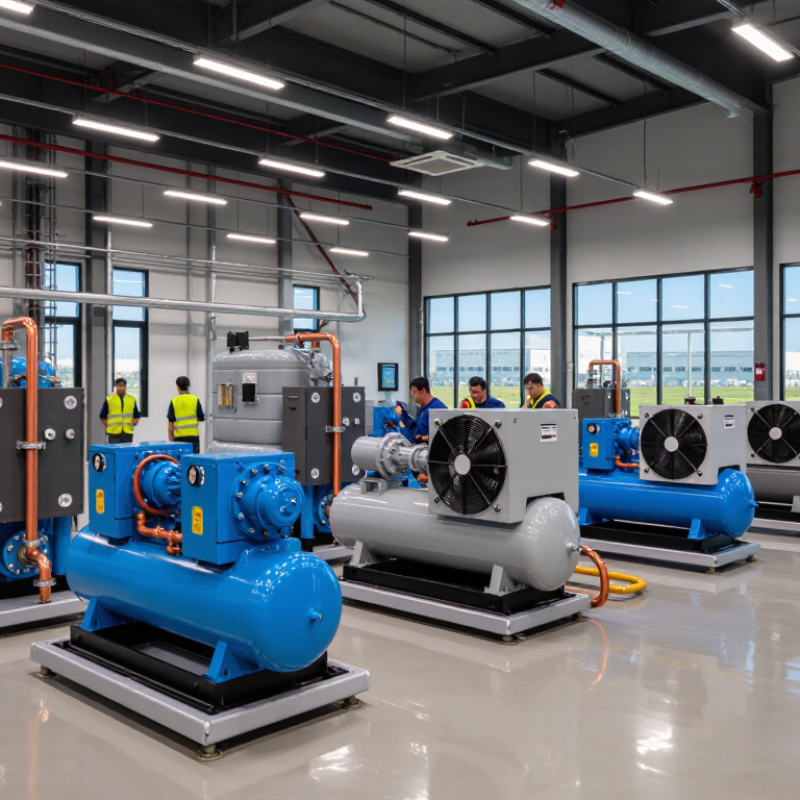
A semi-enclosed compressor, often called a semi-hermetic compressor, combines the motor and compression mechanism inside one bolted housing. Technicians can open this casing for inspection and repair. That differs from a fully hermetic design, which is permanently welded. It also differs from an open compressor, which uses an external shaft seal.
The construction offers practical benefits in cold rooms, chillers, and commercial refrigeration systems. A service engineer can check valve plates, bearings, windings, and oil condition without replacing the entire unit. During field work, small details matter. A dark oil sight glass, uneven vibration, or overheated discharge pipe can indicate deeper damage. Semi-enclosed designs also reduce shaft-seal leakage risks. Still, they require careful assembly and accurate torque settings.
Energy performance makes the compressor choice more important. The International Energy Agency reported that cooling consumed about 10% of global electricity in 2018. Its Future of Cooling report also projected cooling demand could triple by 2050. The UNEP 2022 Refrigeration, Air-conditioning and Heat Pumps Assessment Report identified efficiency improvements as a major emissions-reduction opportunity. A semi-enclosed compressor can support that goal through variable-capacity control and efficient motor design. However, the label alone proves little. Poor installation, incorrect refrigerant charging, or contaminated oil can erase those gains. The terminology is not perfectly consistent across markets. Buyers should compare tested efficiency, service access, operating range, and lifecycle data before selecting equipment.
The table below summarizes ten commonly specified semi-enclosed compressor configurations used in refrigeration and air-conditioning systems. “Semi-enclosed” is commonly used interchangeably with “semi-hermetic”; the motor and compressor are housed in a bolted casing that can be opened for service.
| No. | Semi-Enclosed Compressor Configuration | Typical Application | Common Refrigerants | Typical Capacity Range* | Typical Evaporating Range* | Main Strength | Important Selection Check |
|---|---|---|---|---|---|---|---|
| 1 | 2-cylinder reciprocating | Small cold rooms, display cases, and light commercial refrigeration | R134a, R513A, R404A, R449A | 1–8 kW | −35 to +10°C | Compact size and simple service access | Motor protection, oil return, and starting current |
| 2 | 4-cylinder reciprocating | Medium-temperature refrigeration, supermarkets, and process cooling | R134a, R513A, R404A, R448A, R449A | 5–30 kW | −30 to +10°C | Wide operating range and good part-load flexibility | Discharge temperature and capacity-control method |
| 3 | 6-cylinder reciprocating | Central refrigeration racks, food storage, and larger cold rooms | R404A, R448A, R449A, R507A, R134a | 15–70 kW | −40 to +10°C | High displacement with staged capacity control | Vibration control, oil management, and rack compatibility |
| 4 | 8-cylinder reciprocating | Large refrigeration plants and industrial cooling systems | R404A, R448A, R449A, R507A, R717-compatible designs | 35–140 kW | −40 to +10°C | High capacity and maintainability | Foundation strength, oil separator, and electrical loading |
| 5 | Semi-enclosed scroll | Packaged chillers, comfort cooling, and small heat pumps | R410A, R32, R454B, R513A | 3–35 kW | −15 to +15°C | Low vibration, compact construction, and efficient operation | Refrigerant approval, phase protection, and return-liquid control |
| 6 | Parallel scroll compressor set | Modular supermarket systems and variable-load commercial plants | R448A, R449A, R407C, R410A, R454B | 15–120 kW | −30 to +10°C | Capacity staging and operational redundancy | Controller sequencing, oil equalization, and minimum run time |
| 7 | Twin-screw semi-enclosed | Industrial chillers, process cooling, and large heat-recovery systems | R134a, R513A, R1234ze(E), R407C | 80–600 kW | −20 to +10°C | High flow capacity and effective slide-valve or variable-speed control | Oil circuit, discharge temperature, and unloading range |
| 8 | Low-temperature reciprocating | Frozen-food storage, blast freezing, and ice production | R404A, R507A, R448A, R449A, R290-specific designs | 5–80 kW | −50 to −25°C | Suitable for low suction temperatures | Economizer or liquid-injection requirements and discharge limits |
| 9 | Medium-temperature reciprocating | Dairy, beverage, produce, and general process refrigeration | R134a, R513A, R404A, R448A, R449A | 8–100 kW | −25 to +5°C | Reliable operation across common commercial conditions | Efficiency at design load and compatibility with the oil type |
| 10 | Heat-pump-duty semi-enclosed compressor | Air-source heat pumps, water-source heat pumps, and reversible chillers | R410A, R32, R454B, R407C, R290-specific designs | 5–250 kW | −20 to +15°C | Designed for frequent mode changes and high condensing temperatures | Envelope limits, crankcase heating, defrost operation, and pressure ratio |
*Capacity and temperature figures are indicative engineering ranges rather than manufacturer-specific ratings. Actual performance depends on refrigerant, suction and condensing temperatures, superheat, subcooling, motor frequency, oil type, and operating conditions.