Why Choose Carlyle Compressor for Global HVAC Needs?

HVAC systems are judged in real buildings, not only in laboratory tables. For contractors, facility managers, and equipment designers, compressor selection affects comfort, energy use, maintenance, and operating risk. Carlyle Compressor remains a practical option for global HVAC needs because its product range supports demanding commercial and industrial applications. Yet brand recognition alone should never decide a project.

Field experience shows that reliable performance begins with correct matching. Engineers must compare capacity, application range, refrigerant requirements, motor characteristics, controls, and local service conditions. Carlyle Compressor solutions can support systems where stable cooling, manageable maintenance, and long operating life matter. A properly selected unit may run behind a supermarket ceiling, inside a hotel plant room, or beside process equipment in a warm factory. Small details matter there. Oil return, vibration, airflow, and startup behavior can influence the whole installation.

Performance data still needs careful interpretation. Published ratings may not reflect dusty coils, unstable voltage, poor commissioning, or seasonal load changes. This is where professional judgment becomes essential. No compressor fits every site. A responsible selection process checks manufacturer documentation, certified ratings, installation guidance, and qualified technical support before approval. It also considers spare parts access and technician training across regions. These practical checks strengthen reliability beyond the brochure. Some assumptions may prove wrong after commissioning, and that possibility deserves attention. By examining Carlyle Compressor through performance, serviceability, efficiency, and lifecycle value, this guide offers a balanced foundation for global HVAC decisions.
Why Choose Carlyle Compressor for Global HVAC Needs?

Global HVAC Demand: Cooling Uses About 10% of World Electricity (IEA)

Global cooling demand is rising, and compressors sit at the center of this energy challenge. The International Energy Agency reports that cooling uses about 10% of global electricity. That figure is sobering. A small efficiency loss, repeated across offices, stores, and homes, can become a major operational cost.

Reliable compressor selection requires more than comparing capacity labels. Engineers should examine seasonal efficiency, refrigerant compatibility, sound levels, control response, and expected operating temperatures. A compressor must also match the system’s evaporator, condenser, and expansion device. In real installations, poor sizing can cause short cycling, unstable temperatures, and premature wear. These problems are often missed during sales discussions. Field data and maintenance records reveal them later.

Tips: Check performance at actual design conditions. Ask for verified efficiency data, service guidance, and spare-parts availability. Inspect vibration and oil conditions regularly. Keep records.

High-efficiency equipment can reduce electricity use, but only when installed and maintained correctly. Variable-speed control may improve part-load performance in buildings with changing occupancy. However, it adds control complexity and requires trained technicians. That trade-off deserves honest review. A dependable compressor choice should support lower energy use, steady cooling, and practical service over many operating seasons.
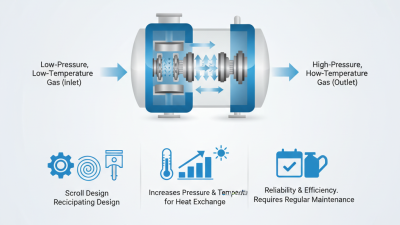

Technology Scope: Carlyle Reciprocating and Screw Compressors for HVAC

Global HVAC demand is becoming more demanding. The International Energy Agency reports that space-cooling electricity use could more than triple by 2050, reaching about 6,200 TWh annually. Compressor selection now affects energy use, service intervals, and indoor comfort.

Reciprocating compressors suit smaller and medium commercial systems. Their compact design supports supermarkets, offices, and packaged equipment with changing loads. Technicians can inspect valves, pistons, and oil conditions directly. This practical access matters in regions with limited service resources. Variable-capacity operation can also reduce frequent cycling. However, reciprocating systems may produce noticeable vibration if mounting and piping are poorly designed.

Screw compressors fit larger HVAC applications and longer operating hours. Twin-rotor compression delivers stable refrigerant flow across industrial buildings, hospitals, and district cooling plants. Many modern systems use capacity slides or variable-speed drives. These controls help match output to real-time demand. The U.S. Department of Energy identifies variable-speed operation as an important path toward improved motor-system efficiency. Still, efficiency claims need field verification. Fouled condensers, incorrect oil levels, and low-load operation can erase expected gains. I have seen specifications look impressive, yet maintenance access was treated as an afterthought. That is a costly weakness. Reliable selection should compare seasonal efficiency, sound levels, refrigerant compatibility, local parts support, and actual load profiles. The best compressor is not always the largest one.

Why Choose Reciprocating and Screw Compressors for Global HVAC Needs?

Refrigerant selection is a key factor in global HVAC compressor design. The chart compares the 100-year global warming potential of commonly used refrigerants, helping illustrate why compressor systems must be matched to regional regulations, operating pressures, and application requirements.

Data: 100-year GWP values based on IPCC AR4 assessment values. Lower GWP does not by itself determine compressor efficiency or suitability.

Efficiency Evaluation: COP and IPLV Under AHRI 540 and 550 Standards

For global HVAC needs, compressor selection should start with measured efficiency, not catalogue claims. COP shows cooling output divided by electrical input at a defined rating condition. IPLV reveals a different story. Under AHRI 550/590, its weighting emphasizes part-load operation: 1% at 100%, 42% at 75%, 45% at 50%, and 12% at 25% load. A compressor with an impressive full-load COP may still perform weakly during mild weather.

AHRI 540 establishes rating procedures for positive-displacement refrigerant compressors. It helps engineers compare capacity, power, and operating limits under consistent conditions. However, laboratory ratings are not field guarantees.

That comparison is not perfect. Fouled coils, voltage variation, oil return, and control tuning can reduce real performance. Independent commissioning data should therefore sit beside certified ratings.

The IEA’s The Future of Cooling projects that cooling energy demand could more than triple by 2050 without stronger efficiency measures. The 2023 Global Status Report for Buildings and Construction also reports that buildings consumed 34% of global energy in 2022. These figures make part-load efficiency commercially important, not merely technical. A reliable compressor platform should provide stable COP, strong IPLV, documented test conditions, and service support across climates. Engineers should question unusually high numbers, especially when the refrigerant, condenser temperature, and auxiliary power are unclear.

Refrigerant Transition: Kigali Amendment Targets 80–85% HFC Cuts by 2045

Why Choose a Compressor for Global HVAC Needs?

The Kigali Amendment is reshaping compressor selection across commercial and industrial HVAC systems. Its targets require an 80–85% reduction in HFC consumption by 2045–2047, depending on national groupings. The numbers are clear. UNEP estimates that full implementation could prevent up to 0.4°C of warming by 2100. This timeline makes refrigerant compatibility a purchasing decision, not a future upgrade.

In field commissioning, technicians assess more than cooling capacity. They check discharge temperature, pressure ratios, oil return, controls, and service access. Low-GWP refrigerants can operate at different pressures, so older compressor designs may create unexpected safety and efficiency concerns. The IEA reports that space-cooling demand could more than triple by 2050 without stronger efficiency measures. A compressor should therefore support efficient part-load operation, stable cycling, and practical maintenance.

A useful choice must also survive local conditions. High ambient temperatures, unstable power, and limited spare parts can expose weak designs quickly. UNEP’s 2023 Cooling Emissions and Policy Synthesis Report links better equipment efficiency with lower energy use and refrigerant emissions. Still, efficiency labels do not tell the whole story. A model that performs well in a laboratory may struggle in a dusty rooftop plant. That assumption deserves testing. Engineers should verify refrigerant approval, lubricant compatibility, lifecycle service needs, and regional technician training before installation.

Lifecycle Value: Reliability, Serviceability, and Global Parts Support

For global HVAC projects, compressor selection should be judged beyond purchase price. Reliability protects temperature control, product quality, and operating continuity. The International Energy Agency reports that cooling demand could more than triple by 2050. That pressure makes efficient, durable equipment increasingly important.

Serviceability has equal value. Accessible components, clear diagnostics, and documented maintenance procedures can shorten repair time. Global parts support adds another layer of resilience. Standardized parts, regional inventories, and technical training reduce delays when a system operates far from its original installer. The U.S. Department of Energy notes that heating and cooling represent nearly half of household energy use in the United States. Better compressor performance can therefore influence both energy costs and carbon impact. Small failures escalate. No compressor is maintenance-proof. That assumption is risky.

Tips: Check parts availability before approval. Ask for documented response times, warranty conditions, and service coverage in each operating region. Review compressor performance under actual ambient temperatures, not only laboratory ratings. Track vibration, discharge temperature, oil condition, and start frequency during operation. These records support earlier intervention and stronger lifecycle decisions. The mistake is focusing only on efficiency at commissioning. A reliable system must also remain repairable five or ten years later. IEA data supports the demand outlook, but site conditions still decide real-world results.

Why Choose Carlyle Compressor for Global HVAC Needs? - Lifecycle Value: Reliability, Serviceability, and Global Parts Support

Lifecycle Dimension Relevant Data or Practice Why It Matters for Global HVAC Projects Recommended Verification Point
Operating Reliability Reliability depends on correct sizing, proper oil return, adequate lubrication, clean heat-transfer surfaces, and operation within the published envelope. Correct system design reduces abnormal loading, liquid migration, overheating, and premature mechanical wear across different climates. Confirm approved operating envelope, oil type, refrigerant compatibility, minimum and maximum evaporating conditions, and discharge-temperature limits.
Serviceability Routine service commonly includes electrical testing, leak inspection, oil and pressure checks, vibration review, filter or strainer inspection, and condenser or evaporator cleaning. A clearly defined maintenance routine helps technicians identify performance deterioration before it causes an unplanned shutdown. Check whether service procedures, required tools, wiring information, troubleshooting steps, and safety instructions are available in the local working language.
Parts Availability Critical replacement items may include gaskets, shaft seals, bearings, valves, terminal components, protection devices, filters, oil, and motor-related parts, depending on compressor design. Regional stock and standardized part identification can reduce equipment downtime when a component fails far from the original installation location. Request current part numbers, supersession records, regional stock locations, standard lead times, and emergency-order procedures.
Energy Performance Compressor efficiency varies with suction temperature, condensing temperature, refrigerant, speed or capacity control, pressure drop, and part-load conditions. Evaluating seasonal and part-load performance provides a more realistic estimate of operating cost than relying only on a single rated-point value. Compare certified capacity, input power, coefficient of performance, and integrated part-load performance under the project’s actual design conditions.
Refrigerant Compatibility Refrigerant selection must match compressor materials, lubricant chemistry, pressure ratings, motor insulation, controls, and applicable safety requirements. Using an incompatible refrigerant or lubricant can cause poor oil return, seal damage, insulation failure, unsafe pressure conditions, or loss of capacity. Verify the approved refrigerant and lubricant combination against the latest technical documentation and local regulations before procurement.
Electrical and Climate Adaptability Voltage, frequency, ambient temperature, altitude, humidity, and power quality can affect starting, motor temperature, insulation stress, and delivered capacity. A configuration suitable for one region may require different motor, control, protection, or condenser selections in another region. Confirm voltage and frequency tolerances, phase requirements, maximum ambient temperature, altitude derating, and restart limitations.
Monitoring and Protection Common protection functions include high- and low-pressure cut-outs, motor overload protection, phase monitoring, discharge-temperature protection, and oil-pressure protection where applicable. Protection systems help limit damage caused by abnormal pressure, loss of lubrication, overheating, phase faults, and electrical overloads. Confirm alarm setpoints, reset behavior, sensor calibration requirements, fault-history access, and integration with the building management system.
Documentation and Training Useful lifecycle documents include installation instructions, wiring diagrams, dimensional drawings, service manuals, refrigerant guidance, spare-parts lists, and commissioning records. Consistent documentation supports safe installation, faster diagnosis, and more uniform maintenance across multiple countries and contractor teams. Confirm document revision dates, language availability, technician training options, and access to technical support during commissioning.
Total Lifecycle Value Lifecycle cost includes purchase price, installation, energy consumption, planned maintenance, refrigerant management, replacement parts, downtime, and eventual disposal or replacement. A lower initial cost does not necessarily produce the lowest total cost when energy use, service access, parts lead time, and downtime are considered. Compare alternatives using a lifecycle-cost model that includes annual operating hours, electricity price, maintenance labor, parts cost, downtime exposure, and expected service life.

Note: Performance, service intervals, approved refrigerants, operating limits, and replacement-part requirements are application-specific and should be confirmed using the latest technical documentation and applicable local safety regulations.